
Warm air from the vents
The fan runs but the air isn't cold. Common causes are a failed capacitor, a stopped outdoor fan, a dirty coil or low refrigerant from a leak.
Cooling trouble
Warm air from the vents on a 95-degree afternoon? Get the fault tested and fixed so the house cools down again.
Where cooling breaks down
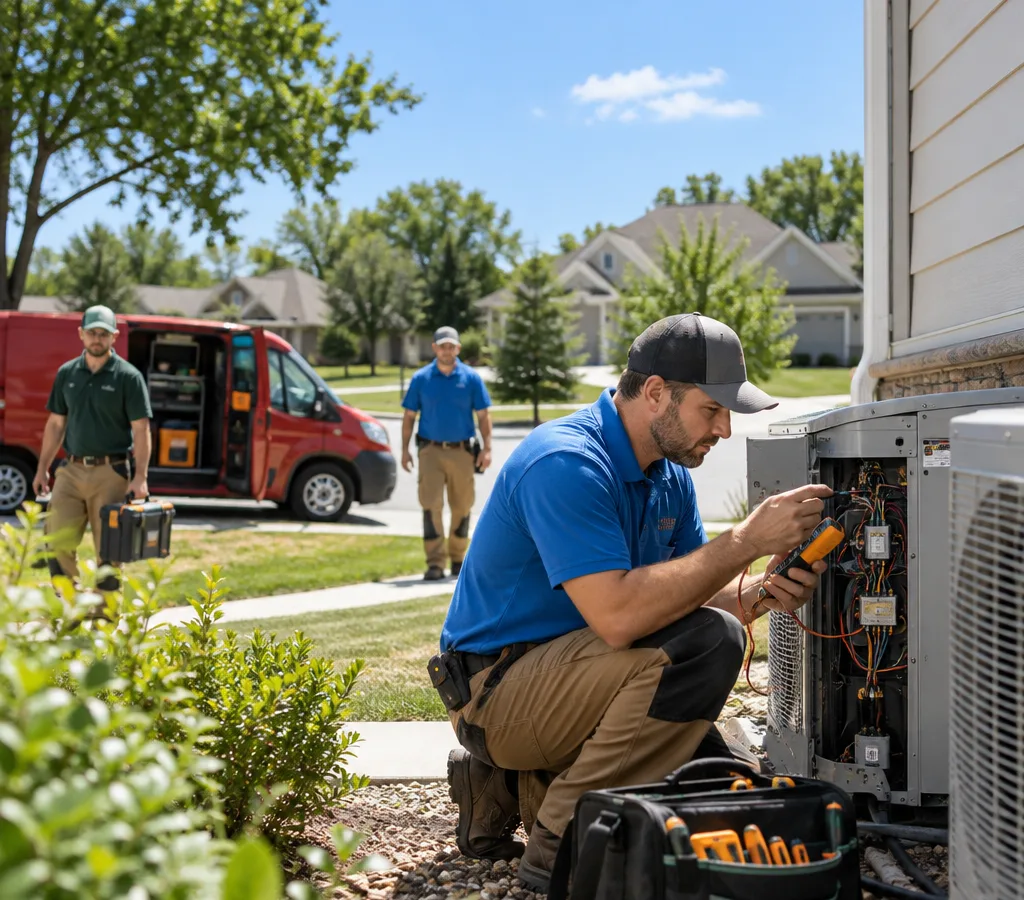
Most air conditioners that quit in summer fail at a few predictable points: a weak start capacitor, a burned contactor, a clogged condensate drain, a frozen indoor coil or a slow refrigerant leak. Good AC repair starts by testing those parts instead of guessing, so you pay for the part that actually failed. That's also what keeps affordable AC repair affordable.
Air conditioning repair in Wichita, KS often comes down to heat load. A unit that struggles through long afternoons will show its weakest part first, and that part is usually electrical. When the outdoor fan hums but won't spin, or the system runs but the air stays warm, the fix may be a single component rather than a new unit. An AC repair technician may only need to replace the air conditioner capacitor.
If your furnace or water heater is acting up too, mention it on the same call. Our main page covers HVAC Repair Wichita KS for every part of the system.
Signs to watch
The fan runs but the air isn't cold. Common causes are a failed capacitor, a stopped outdoor fan, a dirty coil or low refrigerant from a leak.
Frost on the suction line or indoor coil usually means low airflow or low charge. Switch cooling off and let it thaw before the visit.
A plugged condensate drain or cracked pan can overflow during humid weather and soak flooring or drywall nearby.
A unit that hums without starting often has a weak capacitor or a stuck contactor, which are usually quick, lower-cost repairs.
Repeated trips point to an electrical short, a failing compressor or a motor drawing too much current. Don't keep resetting it.
Frequent on-off cycling can come from a dirty coil, a thermostat problem or a unit that's too large for the house.
Repair or replace
An air conditioner repair usually makes sense when the failed part is isolated and the rest of the system tests sound. Capacitors, contactors, fan motors, drain parts and thermostats are routine repairs on units of almost any age.
The decision gets harder when the compressor fails, the coil leaks, or the unit runs on R-22, an older refrigerant that is no longer produced in the United States for new supply. In those cases, ask the contractor to compare the repair price with the cost of a matched replacement before you approve anything.
Hail is the other local factor. Storms in Sedgwick County can drop hail large enough to bend condenser fins, and bent fins choke airflow through the coil. Fin straightening or a coil replacement may be part of the repair after a bad storm.
What it costs
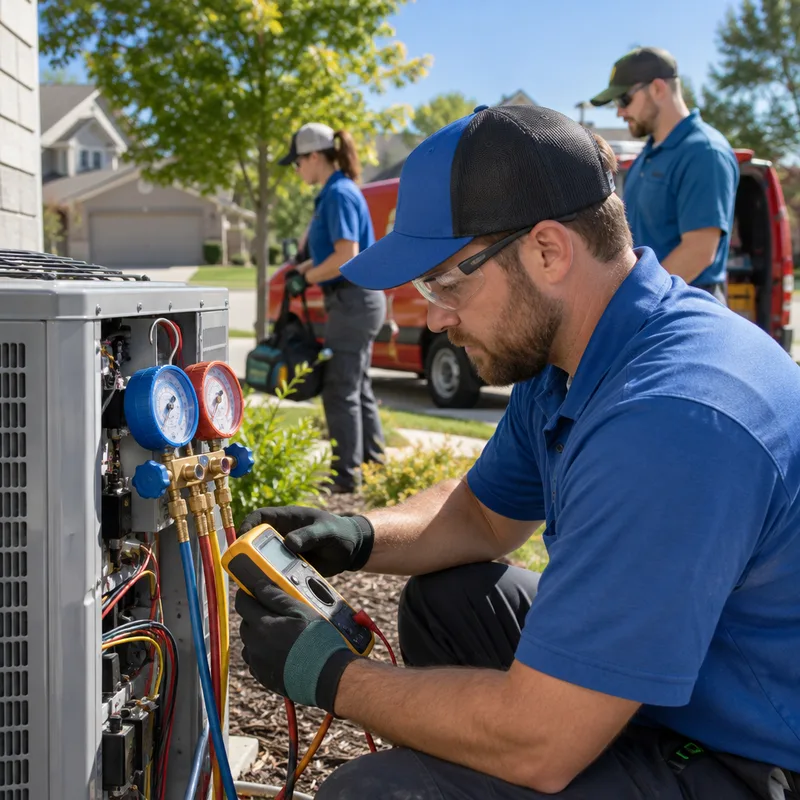
Most AC repairs typically cost about $135 to $700, and the diagnostic visit typically runs about $75 to $155. Capacitors, contactors and drain clearing sit at the low end; fan motors, coil leaks and control boards cost more.
These are typical ranges, not quotes. The final price depends on the part, the refrigerant your system uses and how easy the unit is to reach. Ask for the price before the work starts.
Summer workload
AC service in spring catches the cheap failures before they turn into expensive ones. A technician checks the capacitor rating, cleans or rinses the outdoor coil, tests the contactor and clears the condensate drain. Recharging an AC system without finding the leak only buys time, so a good visit looks for the leak first.
That matters here because summer heat has been running longer. The National Weather Service reported that the high temperature in Wichita, Kansas reached 90 degrees every day in August 2026, the first time that has happened in any August on record. Long stretches like that keep compressors running for hours and find any weak part quickly.
Warm air or ice on the lines? Get it checked before the compressor overheats.
Call (316) 400-5244Cooling questions
Most AC repairs typically cost about $135 to $700, plus a diagnostic visit of about $75 to $155. Major parts like a compressor or coil cost more.
The most common causes are a failed capacitor, a stopped outdoor fan, a dirty coil or low refrigerant from a leak. A technician needs to test the system to tell which one it is.
Yes. Switch the thermostat to off, leave the fan on to help it thaw, and call before running cooling again, because running a frozen coil can damage the compressor.
Often yes, if the leak is small and the part is available, but R-22 is expensive because it is no longer produced for new supply. Compare the repair price with a replacement quote.
It can. Large hail bends the coil fins and can dent the cabinet, which cuts airflow and makes the unit work harder. A technician can check the coil after a storm.
Some do, but most residential air conditioning repair calls are for central systems. Window AC repair can cost close to the price of a new window unit.
Only if testing shows the thermostat failed. A tripped breaker, a blown low-voltage fuse or a full drain pan switch can cause the same symptom.
Get cool air back
Describe what the system is doing and when it started. You'll talk with an experienced local contractor who can test it and explain the repair before work begins.