
Thick ice that won't clear
Light frost that melts every so often is normal. A solid block of ice points to a failed defrost control, sensor or low refrigerant.
Year-round systems
Heat pump iced over or blowing cool air in winter? Get the defrost, refrigerant and backup heat tested so it works in both seasons.
Two jobs, one unit
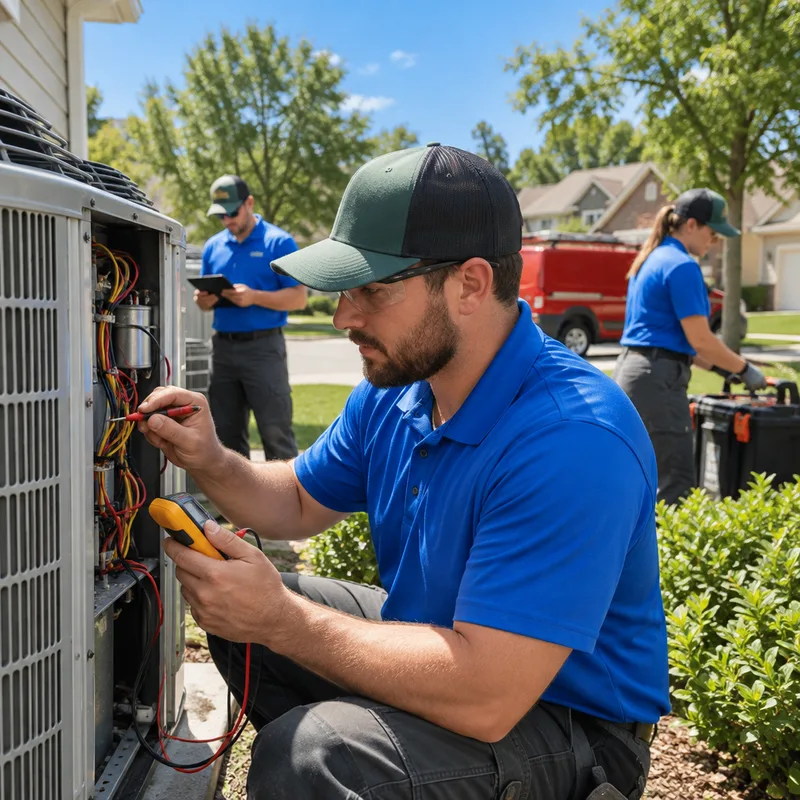
A heat pump does two jobs with one outdoor unit, so it has a few parts an air conditioner doesn't: a reversing valve that switches between heating and cooling, a defrost control that melts ice off the coil in winter, and usually electric backup heat inside. Most heat pump repairs involve one of those, or the same capacitors and contactors any outdoor unit uses.
Heat pumps in Wichita, KS work hardest at the edges of the seasons. A unit that heats well in November can struggle on a January night when outdoor temperatures sit in the low 20s and the system leans on backup heat. That's normal; a unit that can't keep up at all, or runs on backup heat all day, is not.
Heat pump service follows the same logic: test first, then repair. For furnaces and other equipment, see HVAC unit repair on our main page.
What owners notice
Light frost that melts every so often is normal. A solid block of ice points to a failed defrost control, sensor or low refrigerant.
If the unit only heats or only cools, the reversing valve or its solenoid may have failed.
Brief steam during defrost is normal. Constant noise, grinding or banging is not.
A heat pump that runs on backup heat all the time can double the cost of heating. A refrigerant or sensor problem is often the cause.
Air from a heat pump feels cooler than furnace air, but it should still be clearly warm. Lukewarm air can mean a refrigerant or valve problem.
Capacitors, contactors and thermostat wiring fail on heat pumps the same way they do on air conditioners.
Storm damage
Heat pump installation becomes the better choice when the compressor fails on an older unit, the coil leaks again after one repair, or the system uses a refrigerant that is getting expensive to buy. Ask for a side-by-side price on the repair and a replacement before you decide.
Hail is a local reason outdoor units wear out early. On September 3, 2025, the National Weather Service reported hail up to baseball size in parts of Wichita, Kansas, and storms like that can bend the coil fins on a heat pump. Bent fins cut airflow in both heating and cooling, so check the unit after any hailstorm.
Heat pump replacement in this area typically costs about $4,200 to $7,900 depending on size and efficiency. A load calculation should set the size, not the old unit's label.
Price range
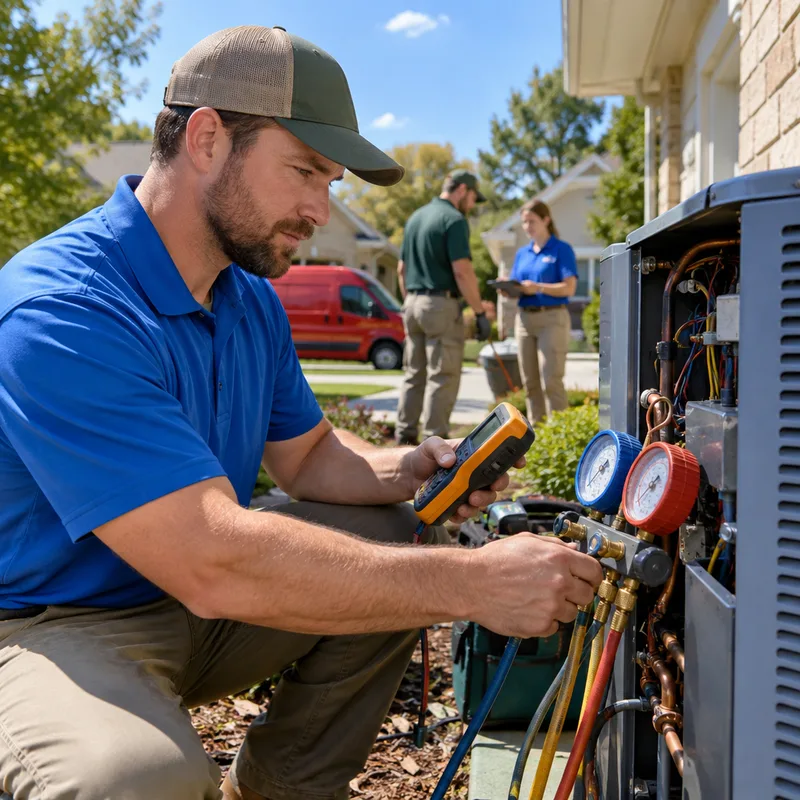
Most heat pump repairs typically cost about $160 to $650, and the diagnostic visit typically runs about $75 to $155. Capacitors and contactors are at the low end; reversing valves, defrost boards and leak repairs cost more.
These are typical ranges, not quotes. A compressor failure on an older unit is often priced against a replacement instead.
Backup heat
Most heat pumps here are paired with electric heat strips or a gas furnace that takes over when it gets too cold for the outdoor unit to keep up. When the backup side fails, the house feels it on the coldest night of the month.
A technician can test the heat strips, the sequencer and the outdoor thermostat or control setting that decides when backup heat turns on. A setting that's too high can run up bills; one that's too low can leave the house cold.
Ice that won't clear or cool air on heat? Get it tested before winter bills climb.
Call (316) 400-5244Owner questions
Most heat pump repairs typically cost about $160 to $650, plus a diagnostic visit of about $75 to $155. Compressors and major valves cost more.
A light frost that clears during defrost cycles is normal. Thick ice that stays on the coil means the defrost system or refrigerant needs checking.
Heat pump air feels cooler than furnace air, but it should be clearly warm. Lukewarm air can mean low refrigerant, a stuck reversing valve or a defrost problem.
Yes, with backup heat for the coldest nights. Most systems here use electric heat strips or a gas furnace as the second stage.
Often yes. Bent fins can be straightened and damaged parts replaced, but a crushed coil may need replacing. A technician can check it after a storm.
Both seasons covered
Describe what the unit is doing, whether it's heating or cooling, and anything you've noticed outside. You'll talk with an experienced local contractor before any work is scheduled.