
Furnaces
Gas and electric furnaces: igniters, flame sensors, motors, controls and safety checks.
Every part of the system
Not sure whether it's the furnace, the AC or the ducts? Start with one call and get the whole system looked at together.
How the pieces fit
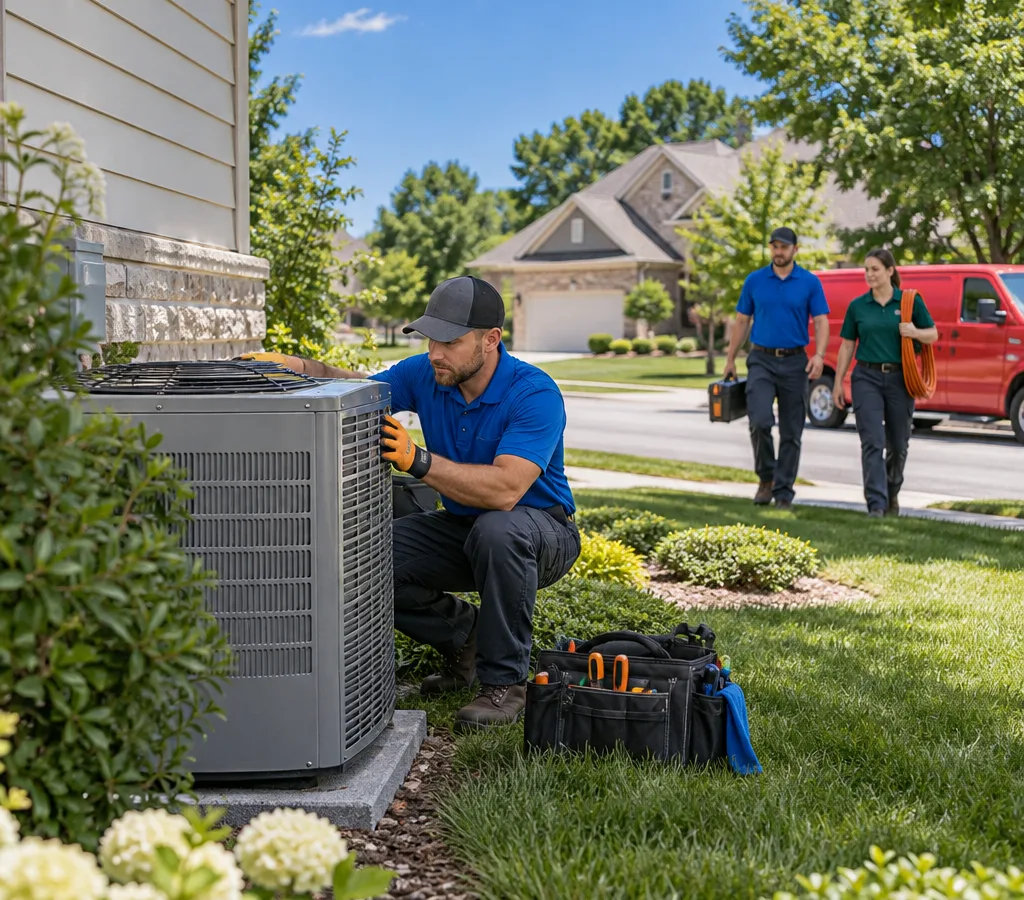
Heating, ventilation and air conditioning in most homes is one connected system: a furnace or air handler moves air, an outdoor unit removes heat in summer (or adds it, for a heat pump), and the ductwork carries air to every room and back. A problem in one part usually shows up somewhere else, which is why weak airflow upstairs can turn out to be a dirty coil or a crushed return duct.
That's the case for looking at the whole system when something goes wrong in a Wichita, KS home. An HVAC technician who checks the filter, blower, coil, ducts and thermostat along with the failed part is more likely to find why it failed.
For a specific breakdown, our main page covers HVAC repair companies and the repairs they handle.
What's covered
Gas and electric furnaces: igniters, flame sensors, motors, controls and safety checks.
Central AC repairs, coil cleaning, refrigerant leaks and replacement quotes.
Defrost, reversing valves, backup heat and ductless systems.
Return problems, crushed or leaky ducts, balancing and duct cleaning.
Smart thermostats, zoning dampers and wiring problems.
Filters, humidifiers and fresh-air ventilation for tighter homes.
Local conditions
Heating and air conditioning options here usually come down to a gas furnace with central AC, or a heat pump with backup heat. Both handle summers in the 90s and winter nights in the low 20s when they're sized correctly.
Outdoor equipment takes a beating from storms. On April 25, 2026, the National Weather Service logged hail from quarter to golf-ball size across parts of Wichita, Kansas, including near 13th and West. Hail like that bends coil fins and can puncture a coil, so an outdoor unit is worth checking after any storm.
Older houses add ventilation questions. About one in ten homes in the city was built before 1940, and many have had central air added later through ducts that were never designed for it.
The right next step
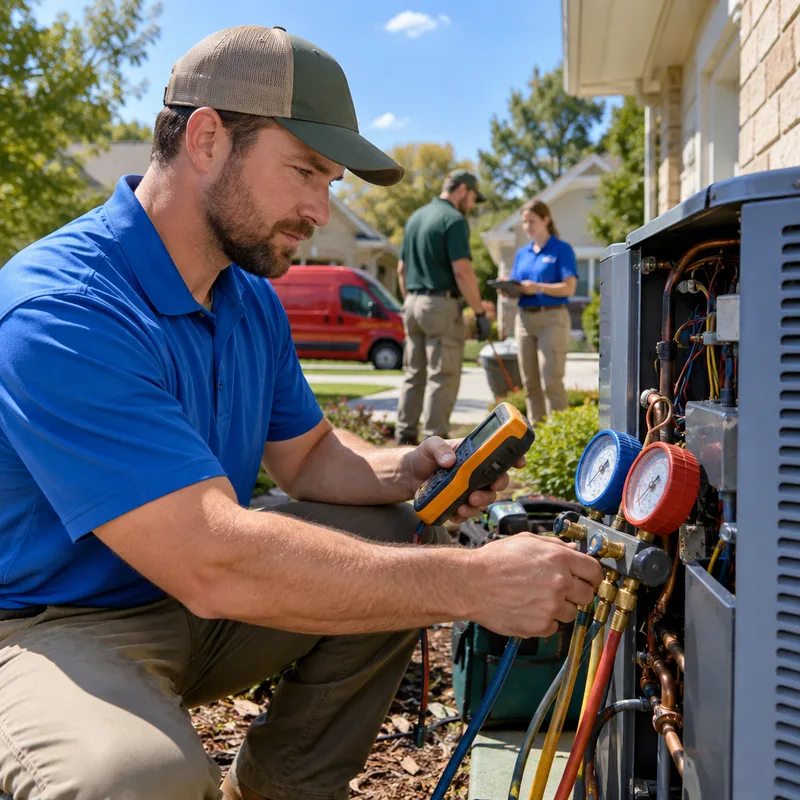
Repair makes sense when one part fails on a system that's otherwise sound. Maintenance is the cheapest way to keep it that way. Replacement is worth pricing when a major part fails on an older system, repairs keep coming back or the house never feels comfortable.
Typical costs give a starting point: most AC repairs run about $135 to $700, most furnace repairs about $100 to $750, and a seasonal tune-up about $75 to $150. A new central AC and gas furnace typically cost about $6,000 to $11,000.
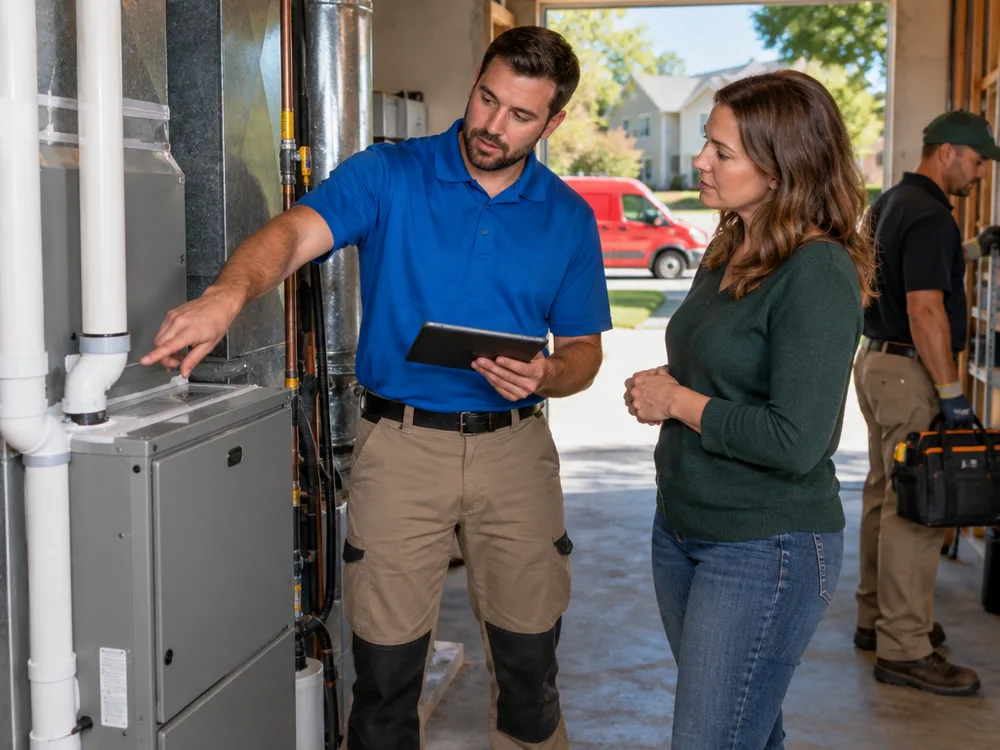
Not sure which part is the problem? One call covers the whole system.
Call (316) 400-5244General questions
Heating, ventilation and air conditioning. In most homes that means the furnace or heat pump, the air conditioner, the ductwork and the thermostat.
Lifespans vary with use and maintenance. Ask the technician to check the age on the data plate and look at the system's condition rather than going by age alone.
An air conditioner only cools. A heat pump uses the same kind of outdoor unit but can reverse to heat the house, usually with backup heat for the coldest nights.
Most AC repairs typically cost about $135 to $700 and most furnace repairs about $100 to $750, plus a diagnostic visit of about $75 to $155.
Usually not. Most HVAC contractors handle furnaces, air conditioners, heat pumps and ductwork.
Start with one call
Describe what's happening, whether it's heating, cooling or airflow. You'll talk with an experienced local contractor who can look at the whole system.