
Burners light, then shut off
A dirty flame sensor is the most common cause. Cleaning or replacing it is usually a quick, lower-cost repair.
Heating trouble
Furnace blowing cold air or not starting at all? Get the failed part found and replaced so the house warms up again tonight.
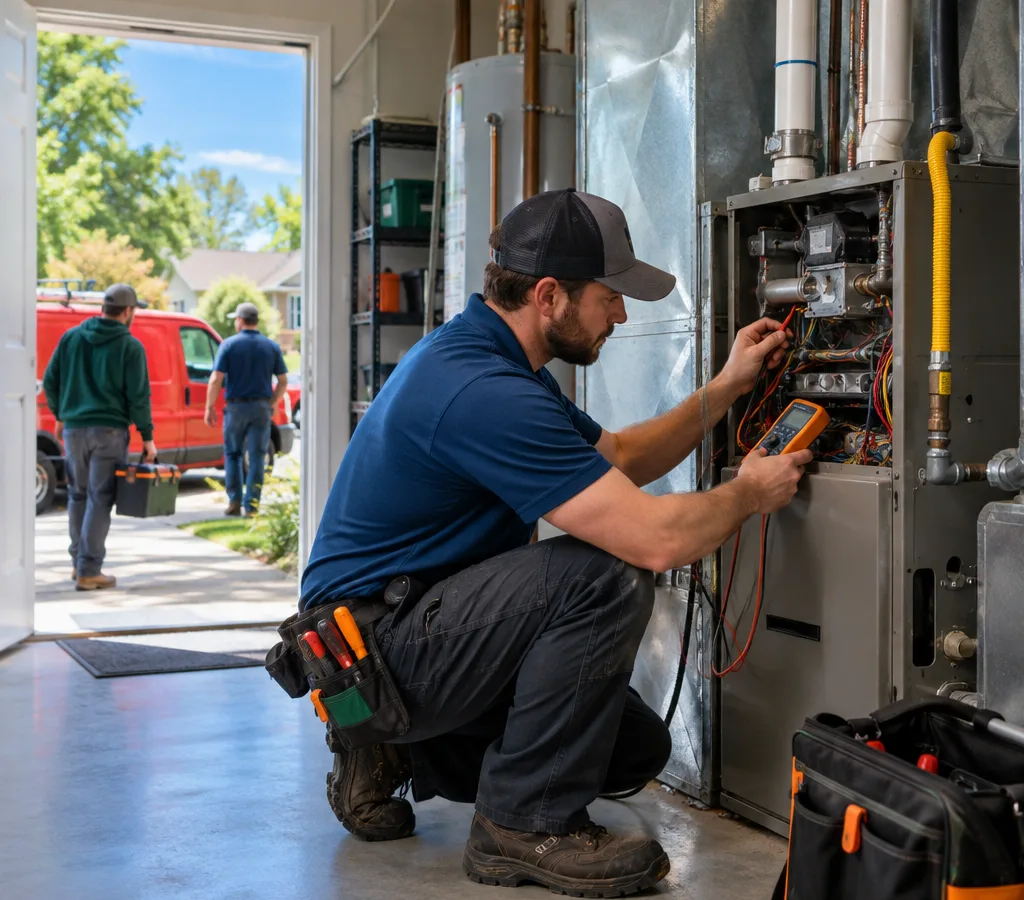
Where heat stops
Most furnace repair calls trace back to a short list of parts: a dirty flame sensor that shuts the burners off after a few seconds, a cracked hot-surface igniter, a failed inducer motor, a stuck pressure switch or a blower motor that has stopped turning. Each one has a clear test, so the repair should start with a diagnosis rather than a parts swap. A good furnace repair technician tests before replacing anything.
Heating repair in Wichita, KS gets busiest when the first real cold front arrives and furnaces that sat idle all summer run for hours. Dust on the flame sensor and a filter that hasn't been changed since spring are behind a surprising number of those first-cold-night calls.
If the air conditioner or water heater needs attention too, our main page covers HVAC repair in Wichita for every part of the system.
Warning signs
A dirty flame sensor is the most common cause. Cleaning or replacing it is usually a quick, lower-cost repair.
The burners may not be lighting because of an igniter, gas valve or pressure switch problem. The blower keeps running as a safety step.
The igniter may be cracked, or the inducer motor or pressure switch may be stopping the start sequence.
Short cycling can come from a clogged filter, an overheating limit switch, a dirty sensor or a thermostat in the wrong spot.
A dusty first start smells briefly. A smell that stays, or smells like hot wiring, means shut it off and call.
High-efficiency furnaces make condensate. A blocked drain or trap can leak and shut the furnace off on a safety switch.
Parts and systems
Heater repairs look different depending on the fuel, and so does a heater repair service visit. Gas furnaces have an ignition sequence (inducer, pressure switch, igniter, gas valve, flame sensor) and a fault anywhere along it stops the heat. Electric furnaces and air handlers use heating elements, sequencers and relays instead.
A good technician reads the furnace's fault code first, then tests each step of the sequence. The same approach applies to HVAC heating repair on heat pumps, and it's how a technician can fix a furnace blower motor problem without replacing parts that still work. That keeps a low-cost sensor from being sold as an expensive control board.
Older homes add another layer. The median local home was built around 1974, and plenty of houses are older than that, so furnaces sit in tight closets, crawl spaces and basements with ductwork that has been changed over the years. Access and old venting can affect both the repair and the price.
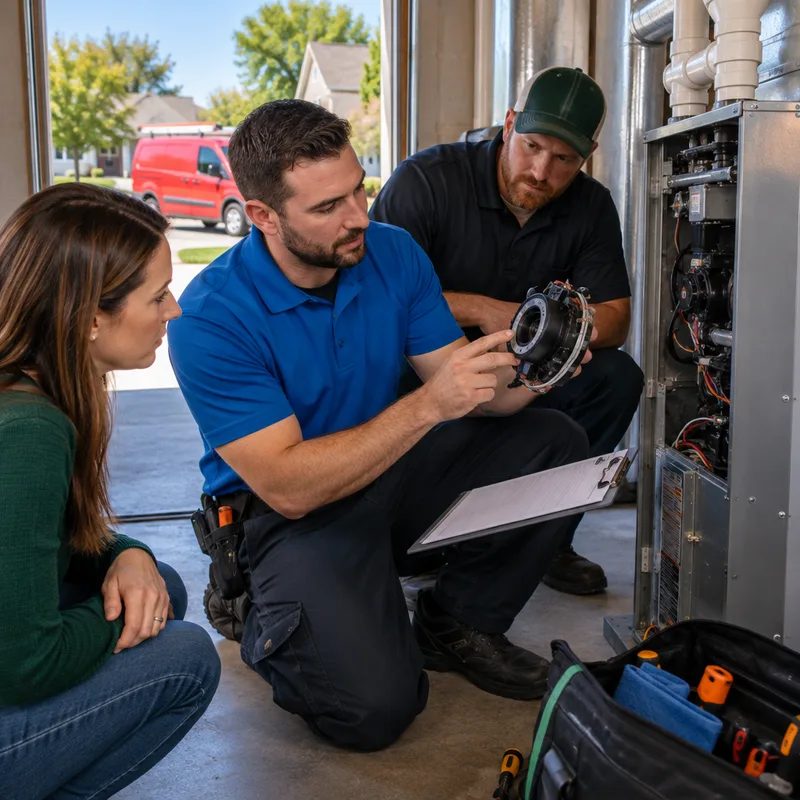
Heating costs
Most furnace repairs typically cost about $100 to $750, and the diagnostic visit typically runs about $75 to $155. Some contractors offer furnace repair and service together, with a tune-up added at the same visit. Flame sensor cleaning and igniters sit at the low end; inducer motors, blower motors and control boards cost more.
These are typical ranges, not quotes. Ask the contractor for the price before the repair begins.
Repair or replace
Heating repair is usually the right call when one part has failed and the heat exchanger, burners and blower test sound. Replacement deserves a look when the heat exchanger is cracked, repairs are piling up, or the furnace is past its expected life and needs a major part.
A cracked heat exchanger is a safety problem, not just a cost one, because it can let combustion gases mix with the air you breathe. If a technician finds one, ask to see it before you decide.
Winter cold in Wichita, Kansas is real but not constant: January lows average in the low 20s, with milder stretches in between. A furnace that limps through a mild week can fail on the first hard freeze, so it's worth fixing problems when they start.
Cold air from the vents? Get the furnace checked before the next freeze.
Call (316) 400-5244Heating questions
Most furnace repairs typically cost about $100 to $750, plus a diagnostic visit of about $75 to $155. Motors and control boards are at the high end.
A dirty flame sensor is the most common cause, followed by a clogged filter or an overheating limit switch. Each can be tested in one visit.
A brief dusty smell on the first cold day is normal. A smell that lasts or smells like hot wiring means turning it off and calling.
Usually yes. Furnace replacements go through the Metropolitan Area Building and Construction Department (MABCD) for a mechanical permit. Ask whether the contractor's price includes pulling it.
Check that the thermostat is set to heat with good batteries, the furnace switch is on, the breaker isn't tripped and the filter isn't clogged.
Warm house again
Tell the contractor what the furnace is doing, any codes on the panel and what you've already tried. You'll get the cause explained and the price before any work starts.