
The AC Will Not Turn On
A failed capacitor, contactor, transformer, control board, thermostat circuit, or safety switch can prevent startup. Testing isolates the fault before a part is replaced.
Serving Wichita, Kansas & surrounding areas
24/7 Emergency Response
AC Repair in Wichita, Kansas
Get a careful diagnosis, a clear explanation of the fault, and practical repair options that can restore dependable cooling.
Cooling Problems Explained
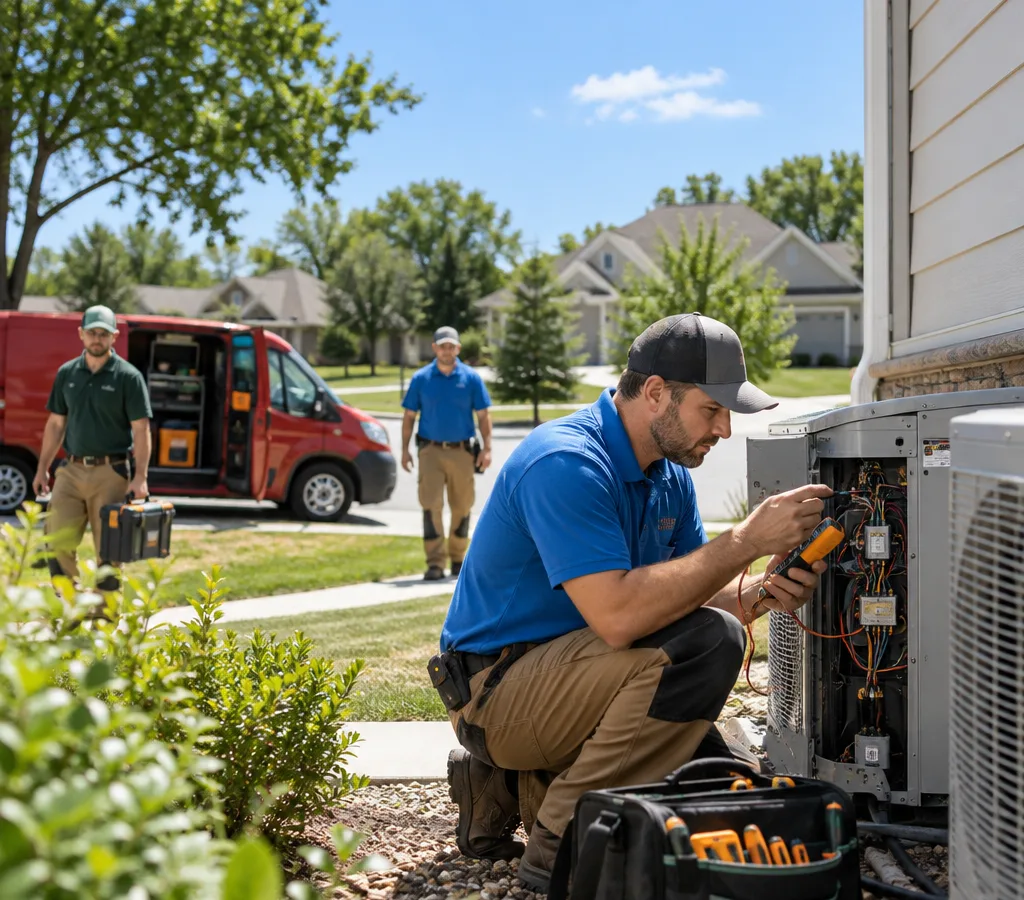
When the house stays warm even though the thermostat is set to cool, you need more than a quick guess. HVAC Repair Wichita KS provides air conditioner repair Wichita KS residents can turn to for problems such as warm airflow, short cycling, unusual noise, weak cooling, water near the indoor unit, and a system that will not start.
Our work begins with the symptoms you have noticed and a systematic inspection of the cooling system. During this process, an experienced HVAC team in Wichita tests the equipment to identify the failed part and check for conditions that may have caused it to fail. You receive an explanation of what is wrong and what the proposed repair covers before work moves forward.
Wichita summers place long cooling demands on residential equipment. Outdoor condenser coils can collect cottonwood fluff, grass clippings, and airborne debris, which restrict heat transfer when buildup becomes heavy. Thunderstorms and electrical disturbances may also expose weak capacitors, contactors, or control components. These conditions do not prove what failed, but they give a technician useful context during diagnosis.
AC Warning Signs
A failed capacitor, contactor, transformer, control board, thermostat circuit, or safety switch can prevent startup. Testing isolates the fault before a part is replaced.
Warm supply air may point to a refrigeration, compressor, electrical, or airflow problem. Weak airflow can involve a clogged filter, blower fault, dirty evaporator coil, or restricted ductwork.
An air conditioner that repeatedly starts and stops may have a control fault, airflow restriction, dirty coil, incorrect refrigerant charge, or equipment sizing issue. Frequent cycling puts extra strain on electrical and mechanical parts.
A blocked condensate drain, damaged drain pan, failed condensate pump, or frozen evaporator coil can produce water around the air handler or furnace. The source should be corrected before moisture damages nearby materials.
Buzzing, rattling, grinding, and squealing can indicate loose panels, electrical trouble, motor wear, or blower problems. Burning odors require prompt attention and the system should be shut off if it appears unsafe.
Hot rooms can result from low airflow, duct leakage, insulation differences, solar exposure, closed dampers, or an equipment fault. Temperature and airflow checks help separate a system problem from a distribution problem.
Evidence-Based Testing
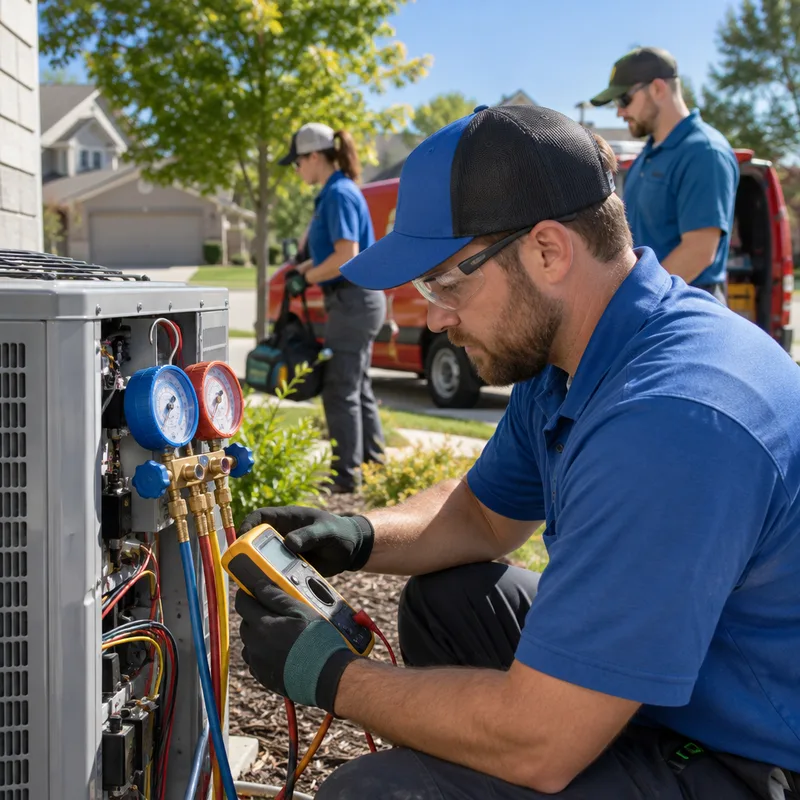
A good diagnostic visit follows evidence. The technician first confirms the thermostat settings and reported symptoms, then checks the disconnect, breaker, low-voltage controls, safety switches, and visible wiring. Electrical measurements may include line voltage, control voltage, capacitor microfarads, contactor condition, and motor amperage.
When the unit runs, temperature and refrigeration readings provide more information. Supply and return air temperatures help evaluate cooling performance. Refrigerant pressures, line temperatures, superheat, and subcooling can be used when appropriate for the equipment and metering device. Refrigerant should not be added simply because the air feels warm. A low charge usually indicates a leak, and charging without investigating the cause can leave the underlying problem unresolved.
The indoor and outdoor coils, blower assembly, filter, condensate drain, and outdoor fan also deserve inspection. Because poor airflow can imitate a refrigerant problem, airflow conditions should be considered before conclusions are drawn from pressure readings.
How Service Works
Step 1 of 5
Share when the problem began, whether it is constant or intermittent, and any sounds, odors, leaks, breaker trips, or thermostat messages you observed.
Step 2 of 5
The technician checks the relevant electrical, airflow, drainage, and refrigeration components. Diagnostic testing focuses on finding the cause rather than changing parts by trial and error.
Step 3 of 5
You receive a plain explanation of the failed component, related system conditions, and the proposed repair. If age, condition, or parts availability affects the decision, those factors should be discussed.
Step 4 of 5
Approved work is completed with parts suited to the system. Some uncommon or model-specific components may require ordering, so timing depends on availability.
Step 5 of 5
After the repair, the system is run and checked for proper startup, airflow, temperature change, drainage, and equipment operation relevant to the original fault.
Repair Cost Factors
Air conditioner repairs in Wichita typically cost about $150 to $650, while major electrical, blower, coil, refrigerant-leak, or compressor work can run $700 to $2,500 or more. A basic electrical component or drain correction is generally at the lower end; sealed-system repairs and model-specific parts cost more.
Final price depends on diagnostic time, the failed component, refrigerant type, system accessibility, parts availability, and whether further faults appear during testing. These are general, nonbinding ranges. The exact cost is confirmed after the service inspection and before approved work begins.
Consider the Whole System
A repair often makes sense when the fault is isolated, the required part is available, and the rest of the system is in serviceable condition. Capacitors, contactors, fan motors, condensate components, controls, and some blower parts can often be replaced without changing the entire system.
Replacement may deserve consideration when a major component has failed, the equipment has repeated breakdowns, corrosion is widespread, or the needed refrigerant and parts make repair difficult to justify. The indoor coil, outdoor unit, metering device, controls, and blower must also work as a matched system. Replacing one major component without checking compatibility can create performance and reliability problems.
A responsible recommendation compares the immediate repair with the condition of the equipment as a whole. It should not claim that every older air conditioner needs replacement. Age matters, but current condition, repair history, efficiency, comfort, refrigerant type, and the cost of the present fault matter too.
Built for Wichita Conditions
Wichita's hot summer weather can expose faults that remain hidden during mild conditions. A weak capacitor may start a motor when outdoor temperatures are moderate but fail under a heavier load. A dirty condenser coil can raise operating pressures, while restricted indoor airflow can cause the evaporator coil to become too cold and ice over.
Homes in established areas such as Riverside and College Hill include older housing where equipment access, electrical updates, additions, and altered duct runs can affect diagnosis. Newer development in northwest Wichita and nearby suburbs may have different equipment layouts, including units placed close to fences or walls. Required clearances vary by manufacturer, but every condenser needs adequate room to move outdoor air through the coil.
Local utility Evergy supplies electricity in Wichita, but an air conditioner problem inside the property is usually diagnosed at the disconnect, branch circuit, controls, and equipment. If other lights or appliances are also affected, the issue may extend beyond the cooling system and should be handled accordingly.
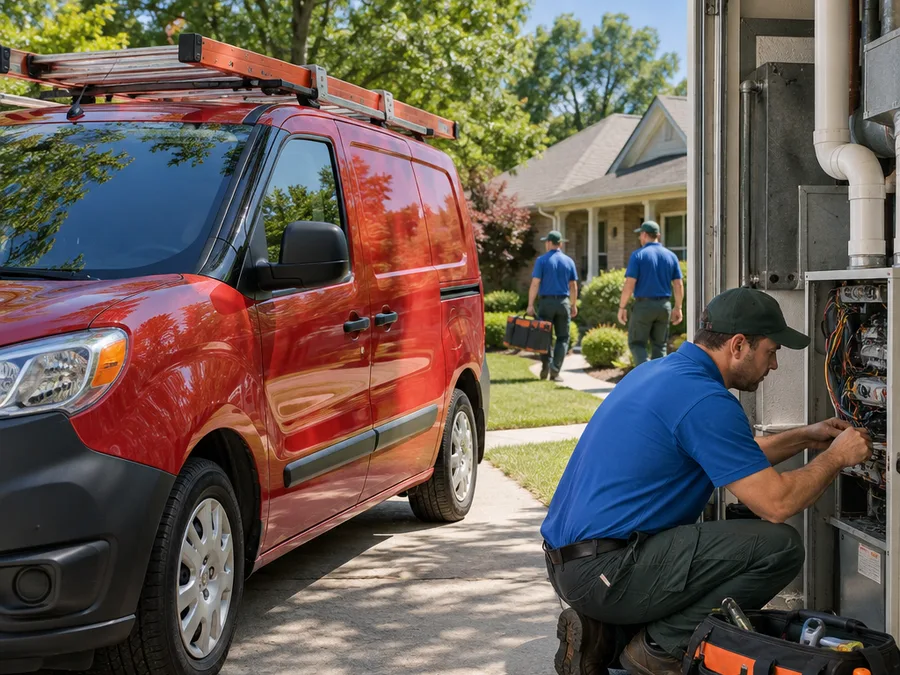
If your air conditioner is blowing warm air, leaking, cycling repeatedly, or refusing to start, arrange diagnostic service before continued operation causes added damage.
Call for Emergency HelpHomeowner Questions
Many common AC faults can be diagnosed and repaired during one visit when the correct part is available. Timing depends on technician availability, equipment access, and whether the system needs a standard component or a model-specific motor, control board, coil, or compressor. Demand also rises during Wichita heat waves, so arranging service promptly is sensible when cooling stops.
Turn the air conditioner off if you smell burning, hear grinding, see ice, notice water near electrical components, or the breaker repeatedly trips. Continued operation can worsen motor, compressor, electrical, or moisture damage. If the system simply is not cooling, switching the thermostat to off also allows frozen indoor coils to thaw before a Wichita AC repair visit.
An AC that runs without cooling may have restricted airflow, a dirty coil, an outdoor fan fault, a failed compressor circuit, or an incorrect refrigerant charge. Confirm that the thermostat is set to cool, replace a visibly dirty filter if it is safe to do so, and make sure the outdoor unit is not blocked by debris. Proper testing is needed before refrigerant or electrical parts are changed.
Some systems that use older refrigerants can still be repaired, but the decision depends on leak location, component condition, refrigerant availability, and total cost. R-22 production and import for new supply ended in the United States, although recovered or reclaimed refrigerant may still be used under applicable rules. A diagnosis should compare repair feasibility with the condition of the full system.
A frozen coil does not automatically mean the system needs refrigerant. Low airflow from a dirty filter, blower trouble, a dirty evaporator coil, or blocked ducts can also cause icing. Turn cooling off and allow the ice to melt; running a frozen system can send liquid refrigerant back toward the compressor and may create water damage as the coil thaws.
The failed component, diagnostic time, refrigerant type, system access, equipment model, and parts availability have the greatest effect on repair price. Standard capacitors and contactors are usually less costly than variable-speed motors, control boards, coils, and compressors. The exact scope should be based on measurements taken at the Wichita property rather than a price given without inspection.
A new thermostat fixes the problem only when testing confirms the thermostat or its wiring has failed. A tripped breaker, open condensate safety switch, blown low-voltage fuse, failed transformer, bad contactor, or outdoor-unit fault can produce the same symptom. Checking the control circuit prevents the cost of replacing a thermostat that still works.
Restore Reliable Cooling
Tell HVAC Repair Wichita KS what the system is doing, when the problem started, and whether you have noticed noise, ice, water, odors, or electrical issues. We will help you take the next practical step toward reliable cooling.