HVAC Service in Wichita, Kansas

HVAC Wichita Kansas

Practical heating and cooling service for repairs, preventive maintenance, system replacement, and indoor comfort concerns.

✓Heating and cooling diagnosis ✓Preventive maintenance ✓Replacement planning
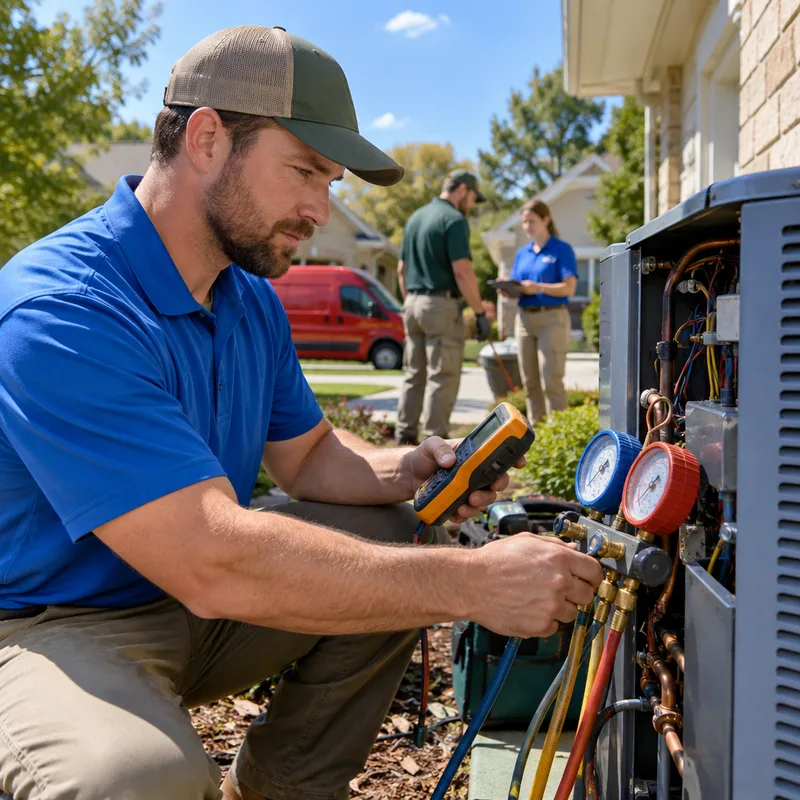
An HVAC technician inspecting a residential outdoor air-conditioning unit at a Wichita home.

Wichita’s summer heat, winter cold, wind, debris, and rapid temperature swings can expose HVAC airflow, electrical, and maintenance problems.

Whole-System Service

Dependable Heating and Cooling for Wichita Homes

When you need HVAC Wichita Kansas service, the first goal is straightforward: identify the problem accurately and recommend work that fits the equipment, the home, and the season. HVAC Repair Wichita KS handles heating and cooling needs across the system life cycle, including troubleshooting, routine maintenance, equipment replacement, and installation planning.

Wichita weather puts both sides of a home comfort system to work. Hot summer afternoons test air conditioners and heat pumps, while winter cold makes dependable heat essential. Strong winds, airborne debris, and rapid temperature swings can also affect outdoor equipment and expose weak electrical parts, restricted airflow, or neglected maintenance. A proper service visit considers those local operating conditions instead of treating one symptom in isolation.

As Wichita's trusted HVAC team, we examine the complete system before discussing the work, including equipment condition, controls, airflow, filtration, and visible duct connections. Customers receive a plain explanation of the findings so they can decide whether repair, maintenance, or replacement makes sense.

Request Emergency Service

Heating, Cooling & Airflow

Complete Wichita HVAC Service

✓

Air-Conditioning Service

Cooling work may include diagnosis of poor cooling, short cycling, unusual noise, water near the indoor unit, frozen coils, or a system that will not start. Testing can cover refrigerant temperatures and pressures, capacitors, contactors, motors, condensate drainage, and thermostat operation.

✓

Heating Service

Heating diagnosis addresses weak heat, frequent cycling, ignition trouble, airflow problems, and unexpected shutdowns. Depending on the equipment, inspection may include burners, flame sensing, safeties, the heat exchanger, electric heat components, or heat-pump defrost operation.

✓

Preventive Maintenance

Seasonal service helps uncover worn electrical parts, dirty coils, blocked drains, weak airflow, and control issues before peak weather puts the system under its heaviest load. Maintenance recommendations should reflect the equipment type and actual condition.

✓

System Installation

Replacement planning includes equipment sizing, efficiency choices, electrical requirements, drainage, venting where applicable, and compatibility with existing ducts. The objective is steady comfort and correct operation, not simply installing the largest available unit.

✓

Airflow and Comfort

Rooms that stay too warm or cold may point to dirty filters, blower settings, duct leakage, closed dampers, return-air limitations, or equipment capacity concerns. Testing the whole air path helps separate duct problems from equipment problems.

✓

Indoor Air Quality

Filtration, humidity control, ventilation, and coil cleanliness can affect comfort and air quality. Recommendations should match the home and HVAC system rather than adding accessories without checking airflow and equipment compatibility.

Request Emergency Service

Cause-Focused Assessment

How HVAC Diagnosis Should Work

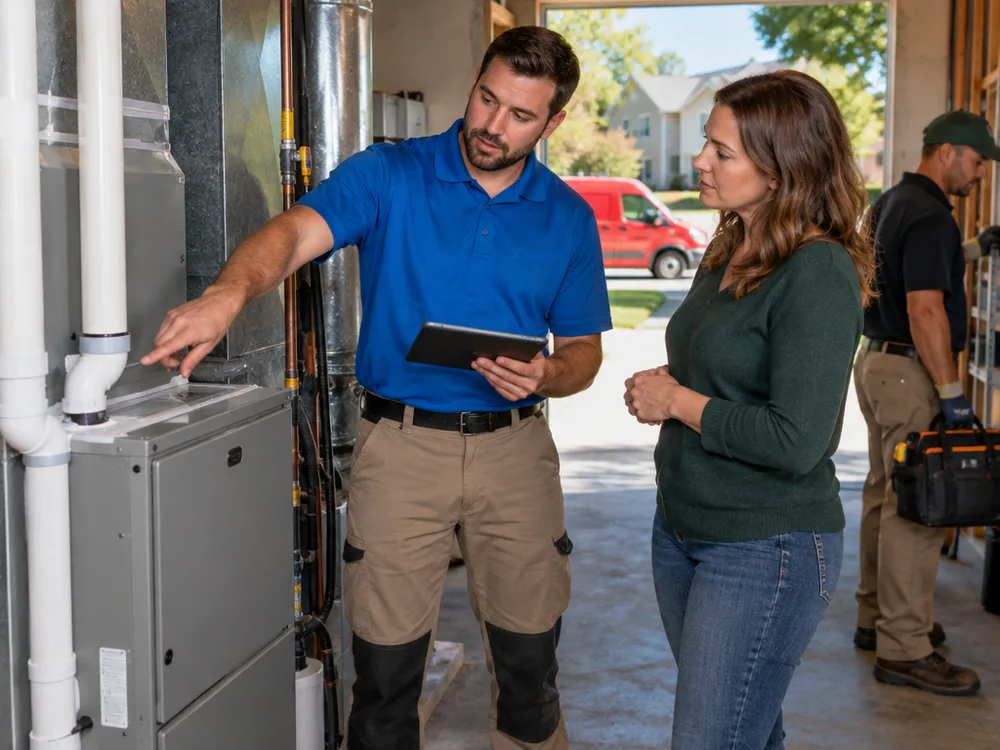
Good diagnosis begins with the customer's description of the problem, followed by operation of the system and measurements that can confirm the cause. For a cooling complaint, that may mean checking temperature change across the indoor coil, static pressure, filter condition, blower operation, electrical components, and refrigerant performance. Refrigerant should not be added automatically. A low charge can indicate a leak that needs further evaluation.

For a furnace, a technician may inspect the ignition sequence, burners, flame sensor, venting, temperature rise, blower, and safety controls. Heat pumps require attention to both heating and cooling operation, including the reversing valve, auxiliary heat, and defrost cycle. Carbon monoxide concerns require immediate care and should never be dismissed as a routine comfort issue.

Wichita neighborhoods contain homes from many construction periods. College Hill includes older housing where duct layout or insulation can affect room-to-room comfort. Riverside also has established homes that may have undergone several equipment changes over time. In newer suburban construction around east and west Wichita, comfort complaints can still result from duct balance, installation details, or thermostat placement. The equipment label alone does not tell the full story.

A technician using electrical meters and HVAC gauges while diagnosing a residential heating and cooling system.

How Service Works

What to Expect From HVAC Service in Wichita KS

  1. Step 1 of 5

    Discuss the Symptoms

    The visit starts with what you have noticed, when it began, which rooms are affected, and whether the equipment has recently been serviced or changed.

  2. Step 2 of 5

    Inspect and Test

    The technician operates the system when conditions allow, checks relevant components, and takes measurements needed to identify the likely failure or performance issue.

  3. Step 3 of 5

    Review the Findings

    You receive an explanation of the observed condition, the proposed scope, and any practical alternatives. When age, condition, or repair scope makes replacement worth considering, that choice is discussed before work proceeds.

  4. Step 4 of 5

    Complete the Approved Work

    Approved repairs, maintenance, or installation work are completed with attention to manufacturer requirements, electrical safety, drainage, venting, and system cleanliness.

  5. Step 5 of 5

    Verify Operation

    The system is run and checked after the work. Final testing should confirm that controls respond, air moves properly, and the equipment completes its operating cycle.

Request Emergency Service

Compare the Complete Scope

Choosing the Best HVAC Company in Wichita KS

The best HVAC Wichita KS provider for your home should be willing to diagnose before recommending, explain measurements in plain language, and provide a written scope. Ask what was tested, what failed, whether the proposed repair addresses the cause, and how the technician will verify operation afterward.

For replacement, ask how equipment capacity will be determined. ACCA Manual J is the recognized residential load-calculation method, while Manual S addresses equipment selection and Manual D addresses duct design. Square footage alone is not a complete sizing method. Windows, insulation, orientation, air leakage, occupancy, and duct conditions all affect the load.

Permits and inspections may apply to HVAC installation in Wichita, depending on the work. Contractors should identify those requirements during planning rather than leaving the homeowner to sort them out after installation. It is also reasonable to ask about manufacturer warranty registration, labor coverage, thermostat compatibility, filter access, and future maintenance needs.

A lower initial proposal may omit electrical upgrades, duct transitions, drain changes, equipment removal, or permit-related work. Compare scopes line by line. A useful proposal identifies the equipment, efficiency rating, included materials, exclusions, and commissioning steps.

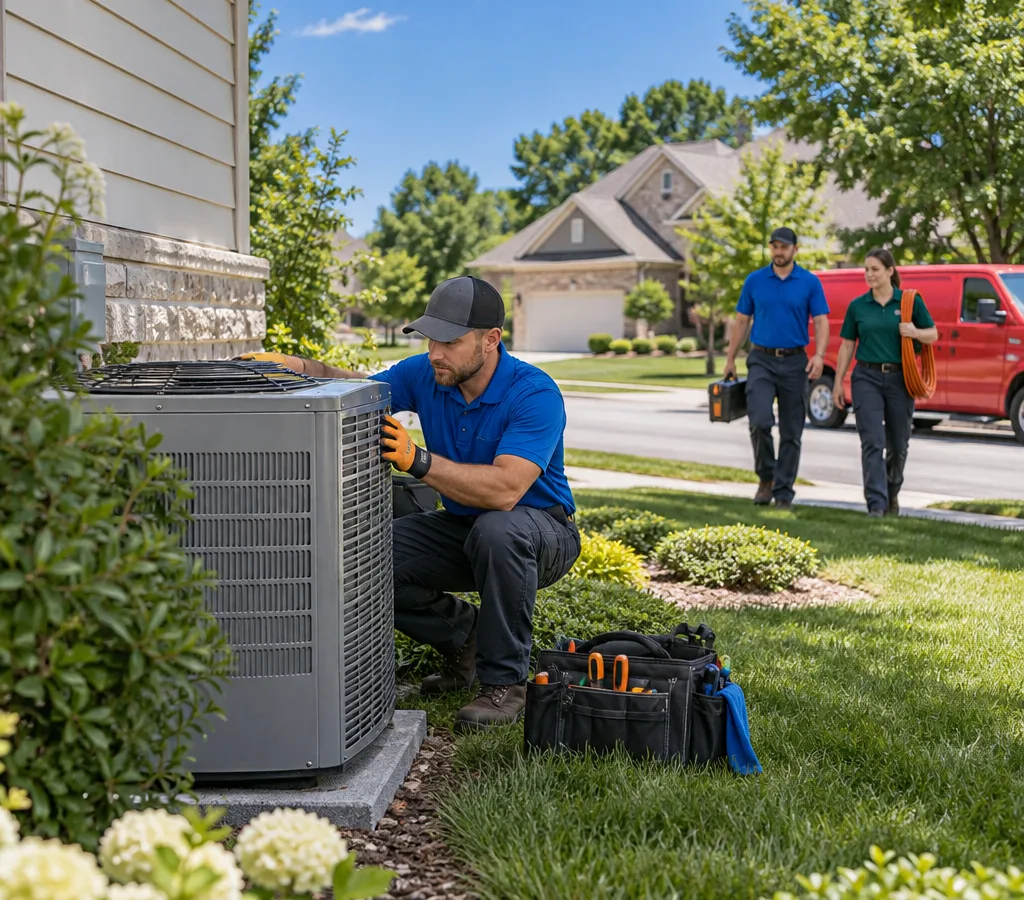
A Wichita homeowner reviewing an HVAC replacement scope and equipment options with a technician beside the indoor system.

Make an Informed Decision

Repair, Maintain, or Replace?

Repair is often reasonable when the fault is isolated, replacement parts are available, and the rest of the system is in sound condition. Maintenance is appropriate when the equipment operates but needs cleaning, adjustment, drainage service, or inspection before heavy seasonal use. Replacement deserves consideration when failures are recurring, a major component has failed, comfort remains poor, or the equipment no longer fits the home's needs.

Age matters, but it should not make the decision by itself. Condition, repair history, efficiency, refrigerant type, installation quality, and the cost of the current repair all belong in the discussion. For a split system, the indoor and outdoor components must also be compatible. Installing mismatched equipment can create capacity, efficiency, humidity, and warranty concerns.

Homeowners comparing Wichita Kansas HVAC equipment will encounter several efficiency terms. SEER2 rates seasonal cooling efficiency, EER2 reflects cooling performance under a specific test condition, AFUE describes how efficiently a furnace converts fuel into usable heat, and HSPF2 applies to heat-pump heating efficiency. Higher ratings can reduce energy use under comparable conditions, but correct sizing and installation remain central to actual comfort.

Request Emergency Service

If your system is noisy, unreliable, unable to hold the thermostat setting, or due for seasonal attention, arrange an inspection and get a clear scope before approving the work.

Call for Emergency Help

Homeowner Questions

Wichita HVAC Questions

How quickly can HVAC service in Wichita be scheduled?+

Scheduling depends on technician availability, the type of problem, and seasonal demand. Cooling failures draw more requests during Wichita heat, while no-heat calls rise during cold weather. Describe whether the system is completely off, making unusual sounds, leaking water, or producing unsafe odors so the visit can be prioritized appropriately. If you smell gas or a carbon monoxide alarm activates, leave the affected area and contact the proper emergency or utility service.

How much does HVAC repair in Wichita KS cost?+

The final cost depends on the failed component, diagnostic time, equipment accessibility, parts availability, and whether related damage is present. A thermostat issue, clogged condensate drain, failed capacitor, blower problem, control-board fault, refrigerant leak, and compressor failure involve very different scopes. A technician needs to inspect and test the equipment before confirming the exact price.

Should I repair or replace my air conditioner or furnace?+

Repair usually makes sense when the failure is limited and the overall system remains dependable; replacement becomes more reasonable when major repairs, repeated failures, poor comfort, or equipment incompatibility change the economics. In Wichita, consider performance during both summer and winter, particularly if a heat pump handles year-round conditioning. Request written repair and replacement scopes when both options are viable.

How long does a residential HVAC replacement take?+

Many straightforward residential replacements can be completed within a working day, while duct changes, electrical work, access constraints, or more complex systems may require additional time. The schedule should account for equipment removal, setting and connecting the new units, drainage or venting work, controls, startup, and final testing. Permit and inspection requirements can also affect the overall timeline.

How often should HVAC equipment be maintained in Wichita?+

Heating and cooling equipment should be inspected on a schedule suited to the system and manufacturer guidance, commonly before its main operating season. Wichita's hot summers and cold winter periods can keep equipment under sustained load. Filters may need attention more often based on filter type, pets, renovation dust, household conditions, and system runtime.

Why is my HVAC system running but not keeping the house comfortable?+

A system that runs without maintaining comfort may have restricted airflow, dirty coils, duct leakage, incorrect blower settings, low refrigerant charge, control problems, or insufficient capacity for the actual load. Uneven temperatures can also stem from return-air limitations or duct balance. Measuring temperature change and static pressure helps distinguish an equipment fault from an air-distribution problem.

Do I need a larger HVAC system for Wichita weather?+

A larger system is not automatically better; capacity should be based on a room-by-room or whole-home load calculation. Oversized air conditioners can cycle too quickly, which may reduce humidity control and create uneven temperatures. A proper calculation considers insulation, windows, air leakage, orientation, occupancy, and local design conditions before equipment is selected.

Plan Your Next Step

Get a Clear Plan for Your Heating and Cooling System

Tell HVAC Repair Wichita KS what the system is doing, and arrange a professional assessment of the equipment, repair options, or replacement needs.