
Cooling Service
Troubleshooting for warm air, poor cooling, frozen evaporator coils, clogged condensate drains, failed capacitors, contactor problems, blower faults, and other air-conditioning issues.
Serving Wichita, Kansas & surrounding areas
24/7 Emergency Response
Heating & Cooling in Wichita, Kansas
Practical help for year-round comfort, including accurate diagnostics, timely repairs, seasonal maintenance, and efficient equipment options.
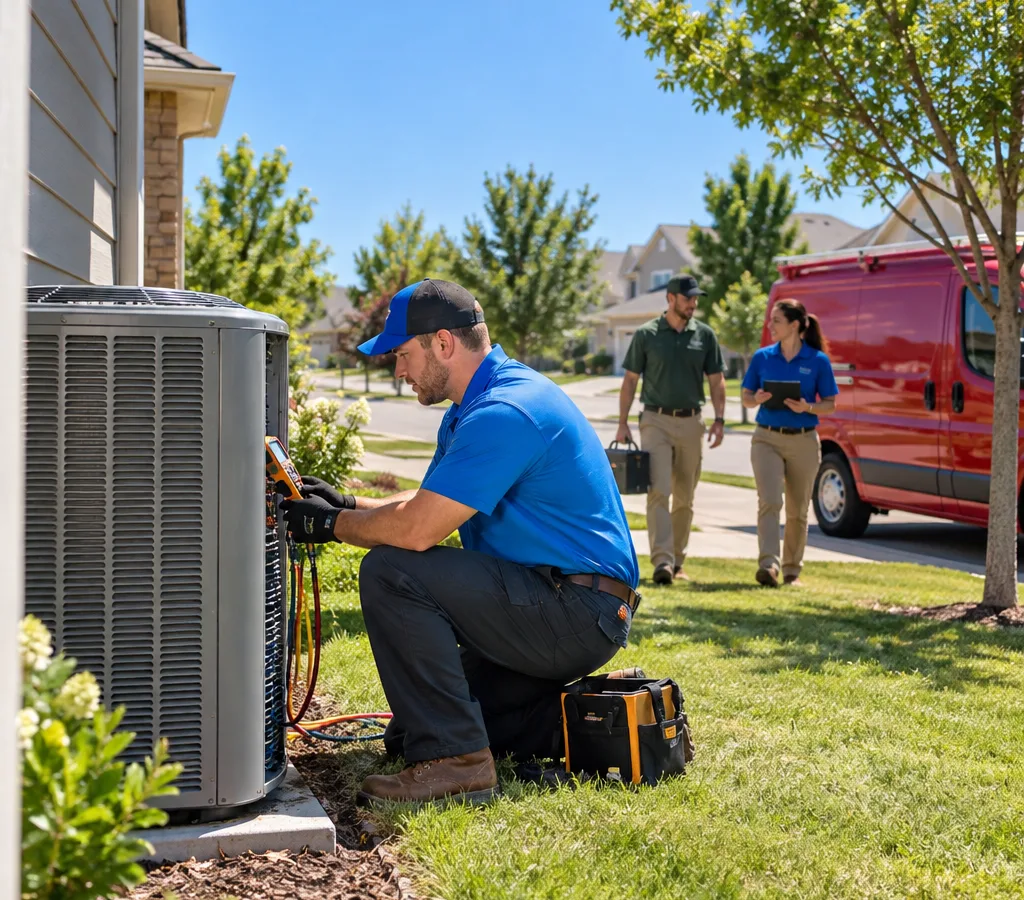
Whole-System Service
When you need heating and cooling Wichita KS service, the first priority is a correct diagnosis. HVAC Repair Wichita KS helps homeowners address uneven temperatures, weak airflow, unusual sounds, rising energy use, short cycling, and systems that will not start. The goal is to identify the cause, explain the options in plain language, and match the work to the condition of the equipment.
Wichita weather puts both sides of an HVAC system to work. Hot summer afternoons increase cooling demand, while winter cold fronts test furnaces, heat pumps, controls, and ductwork. Wind and airborne debris can also collect around outdoor equipment, restricting airflow if the coil and surrounding area are not kept clear. Our HVAC specialists serving Wichita evaluate the whole comfort system rather than replacing parts without checking how they interact.
A service visit may include thermostat checks, electrical measurements, airflow testing, filter inspection, temperature readings, and a visual review of accessible equipment. Refrigerant pressures and temperatures may be measured when cooling symptoms point to the sealed system. For gas heating equipment, safe operation requires attention to ignition, burners, venting, and the heat exchanger.
Year-Round Comfort
Troubleshooting for warm air, poor cooling, frozen evaporator coils, clogged condensate drains, failed capacitors, contactor problems, blower faults, and other air-conditioning issues.
Diagnosis and service for furnaces and heat pumps with ignition trouble, inadequate heat, frequent cycling, airflow restrictions, thermostat faults, or unexpected shutdowns.
Routine checks help uncover worn electrical parts, dirty coils, drainage problems, weak airflow, and control issues before peak heating or cooling demand.
When replacement makes more sense than another repair, equipment should be selected by heating and cooling load, duct conditions, electrical or fuel requirements, and installation constraints.
Hot and cold rooms may trace back to duct leakage, closed dampers, return-air limitations, insulation conditions, equipment sizing, or poor air distribution.
Control service can address inaccurate readings, wiring faults, scheduling problems, equipment communication errors, and compatibility with the existing HVAC system.
Measured Diagnosis
Good diagnostics separate symptoms from causes. A system that runs constantly may have a dirty filter, restricted indoor coil, duct problem, failing blower component, low refrigerant charge caused by a leak, or inadequate capacity for the actual load. Adding refrigerant without investigating a suspected leak does not correct the underlying problem.
The same approach applies to heating Wichita KS homes. A furnace that starts and stops quickly may be responding to restricted airflow, a control fault, an overheating limit, or an ignition issue. A heat pump may need checks at both the indoor and outdoor units because its heating performance depends on refrigerant operation, airflow, controls, and auxiliary heat.
Age alone does not decide whether equipment should be repaired or replaced. The decision should account for the failed component, repair history, energy use, comfort problems, refrigerant type, parts availability, and the condition of the rest of the system. A written scope helps you compare a targeted repair with replacement on equal terms.
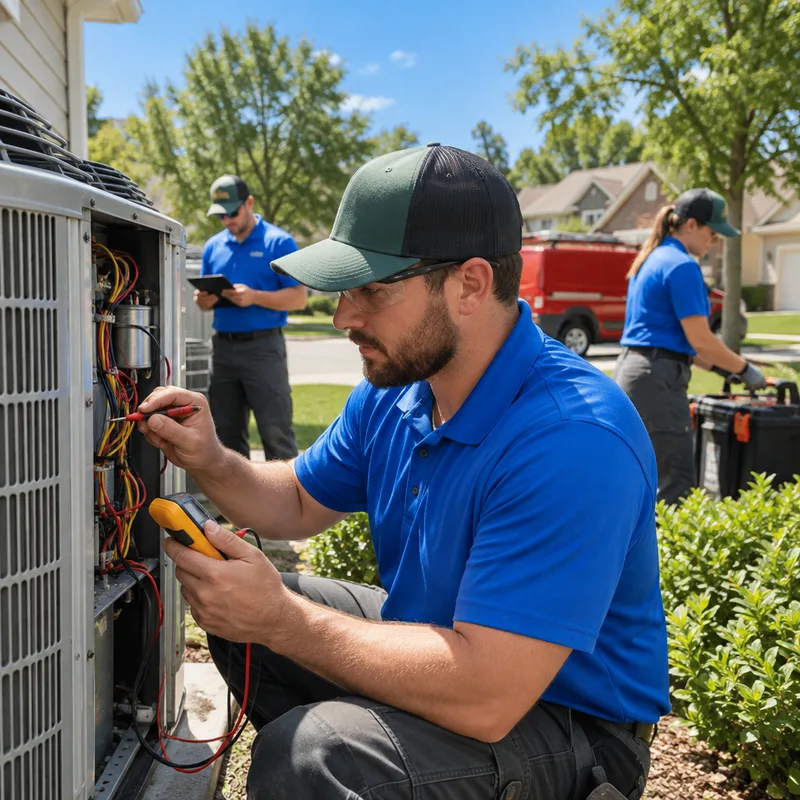
Correctly Matched Systems
A new system should not be selected only by matching the capacity printed on the old unit. Proper sizing starts with the home's heating and cooling load. A Manual J calculation considers factors such as floor area, insulation, windows, orientation, air leakage, and design temperatures. Duct capacity also matters. Manual S equipment selection and Manual D duct principles help connect calculated demand with equipment performance and air distribution.
Oversized cooling equipment can satisfy the thermostat quickly while running short cycles. Undersized equipment may struggle during design conditions. Either problem can affect comfort, moisture removal, energy use, and equipment wear. Installation details such as refrigerant line preparation, evacuation, condensate drainage, electrical protection, airflow setup, gas pressure, venting, and commissioning readings influence how the system operates after startup.
Wichita includes older central neighborhoods as well as newer suburban development, and the mechanical constraints can differ considerably. College Hill homes may have older construction and limited routes for new ducts. Riverside properties can present similar retrofit challenges when equipment spaces are tight. Newer homes in northwest or northeast Wichita may have different zoning, control, and air-balancing needs. The equipment must fit the building rather than forcing one standard design into every home.
How Service Works
Step 1 of 5
The visit begins with when the problem started, what the system is doing, which rooms are affected, and whether recent changes or previous repairs may be relevant.
Step 2 of 5
The technician examines accessible equipment and uses appropriate measurements to check electrical operation, temperature change, airflow indicators, controls, drainage, and system performance.
Step 3 of 5
You receive an explanation of the likely cause, the condition of related components, and the available repair or replacement paths before work proceeds.
Step 4 of 5
Approved work is carried out according to the agreed scope. If new conditions appear after disassembly, they should be discussed before the scope changes.
Step 5 of 5
After service, the equipment is operated through a heating or cooling cycle as appropriate. Controls, temperatures, airflow, drainage, and safe shutdown are checked where applicable.
Seasonal Readiness
Maintenance is most useful when it is completed before the system faces sustained demand. A cooling check can include the filter, indoor and outdoor coils, condensate path, blower operation, electrical components, thermostat, refrigerant indicators, and temperature change across the indoor equipment. Outdoor units need open airflow, so vegetation, leaves, cottonwood debris, and stored items should be kept away from the cabinet.
Heating preparation depends on the equipment. Gas furnaces need checks related to ignition, combustion components, venting, safeties, and the heat exchanger. Heat pumps require attention to outdoor-coil condition, reversing operation, defrost controls, airflow, and auxiliary heat. Homeowners should replace or clean filters according to the filter type and actual loading rather than relying on one schedule for every household.
Maintenance cannot prevent every failure, but it can reveal conditions that deserve attention. It also creates an opportunity to correct thermostat settings, blocked registers, drainage concerns, or airflow restrictions before extreme weather makes a loss of comfort more disruptive.
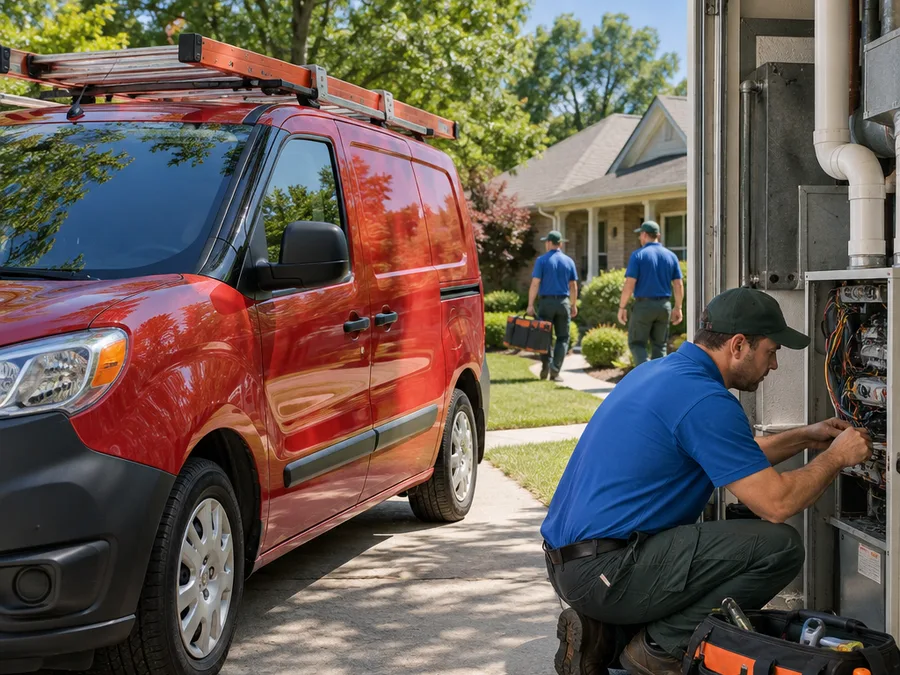
Address weak airflow, inconsistent temperatures, unusual noises, or unreliable operation before the next period of heavy heating or cooling demand.
Call for Emergency HelpHomeowner Questions
Scheduling depends on current demand, the type of failure, parts availability, and whether the system is safely operable. Requests often increase during the first severe heat wave or winter cold snap in Wichita, so describing the symptoms, equipment type, and any error code helps the team prepare for the visit.
Repair is often reasonable when the failed part is available, the rest of the equipment is in sound condition, and the system has not developed repeated costly problems. Replacement deserves consideration when failures recur, comfort remains poor, major components are damaged, or the existing equipment cannot be supported economically. A diagnosis and written comparison provide a firmer basis than age alone.
An air conditioner can run without cooling properly because of restricted airflow, a dirty coil, a failed outdoor-unit component, a refrigerant problem, duct loss, or a control fault. Turn the system off if ice is visible or the outdoor unit is not operating normally. Continued operation can worsen some problems, especially during a hot Wichita afternoon.
A larger system is not automatically better because capacity must match the home's calculated load and the duct system's ability to move air. Oversized equipment may short cycle, while undersized equipment may run continuously during design weather. Equipment selection should consider Manual J load calculations and the manufacturer's performance data.
A replacement plan should check load requirements, duct condition, return-air capacity, electrical service, fuel and venting needs, condensate disposal, refrigerant piping, thermostat compatibility, and installation clearances. Wichita homes with older construction may also require a closer look at equipment access and practical duct routes.
A central HVAC system can often improve room-to-room comfort, but the cause must be identified first. Common factors include duct leakage, poor balancing, undersized returns, closed registers, insulation gaps, solar exposure, and equipment sizing. Temperature readings and airflow checks help determine whether service, duct changes, controls, or building improvements are appropriate.
Heating and cooling equipment is commonly checked before its main operating season, with cooling service before summer and heating service before winter. Filter attention may be needed more often because loading varies with filter type, pets, remodeling dust, fan runtime, and indoor conditions. The equipment manufacturer's instructions remain the best starting point.
Plan Your Next Step
Tell HVAC Repair Wichita KS what your system is doing, and get practical guidance on diagnosis, repair, maintenance, or replacement based on the equipment and your home's needs.