Good service starts with the symptoms. A technician needs to know whether the problem began suddenly, occurs only during extreme weather, affects the whole home, or follows a recent filter or thermostat change. Those details guide the inspection and prevent unnecessary part swapping.
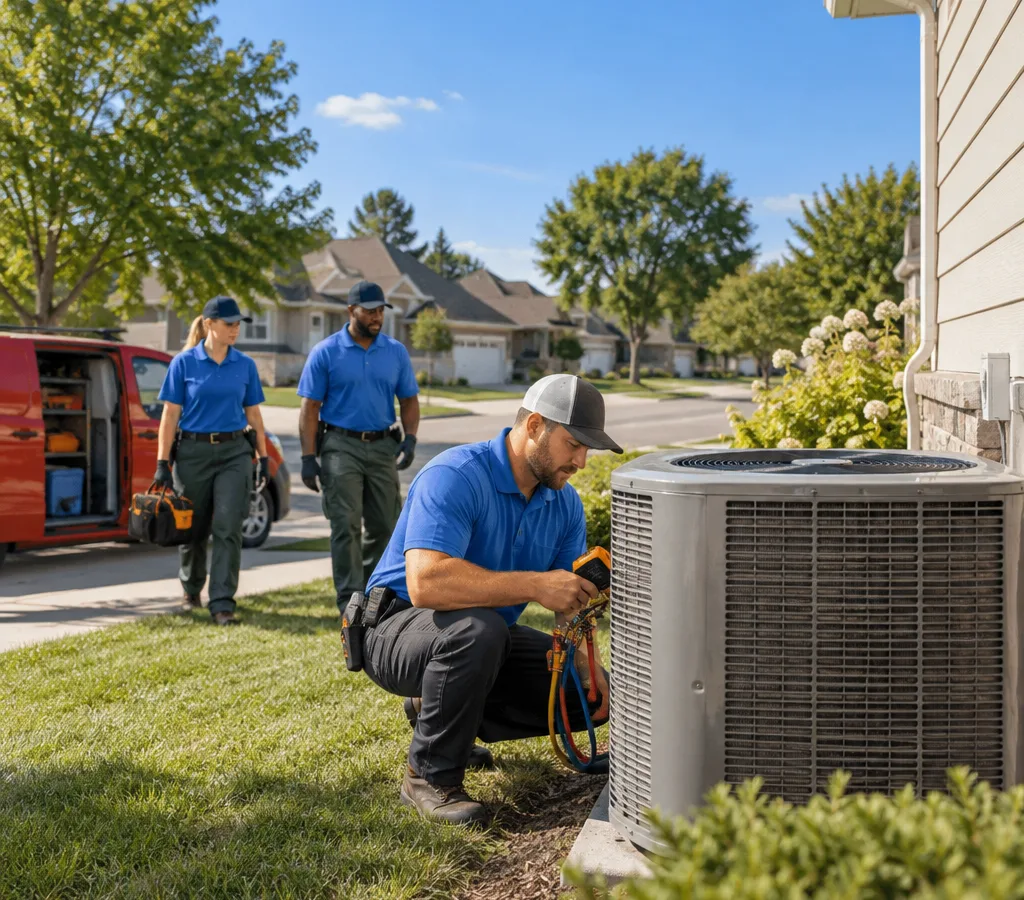
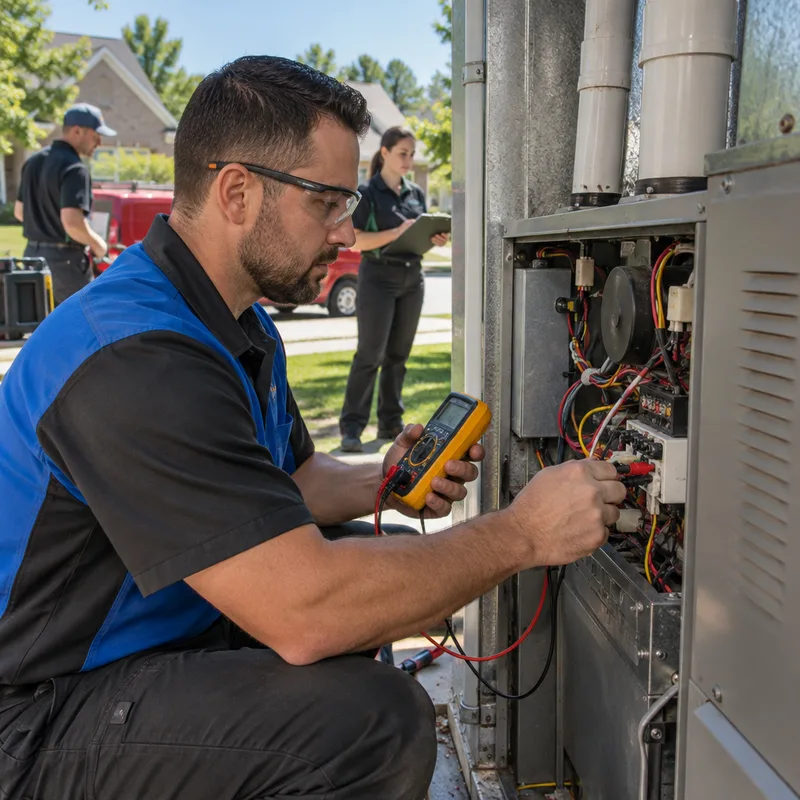
For cooling problems, testing may cover thermostat demand, line voltage, low-voltage controls, capacitor condition, condenser operation, evaporator airflow, temperature change across the indoor coil, and condensate drainage. Refrigerant should not be added automatically. Low charge can indicate a leak, while dirty coils or restricted airflow can produce similar comfort complaints.
For gas furnaces, the operating sequence commonly moves through thermostat demand, inducer operation, pressure-switch confirmation, ignition, gas-valve operation, flame sensing, and blower startup. Heat pumps require checks of both refrigeration and control functions, including the reversing valve and auxiliary heat when symptoms point in that direction. Combustion and electrical work should be handled by qualified personnel because improper testing or repair can create serious hazards.
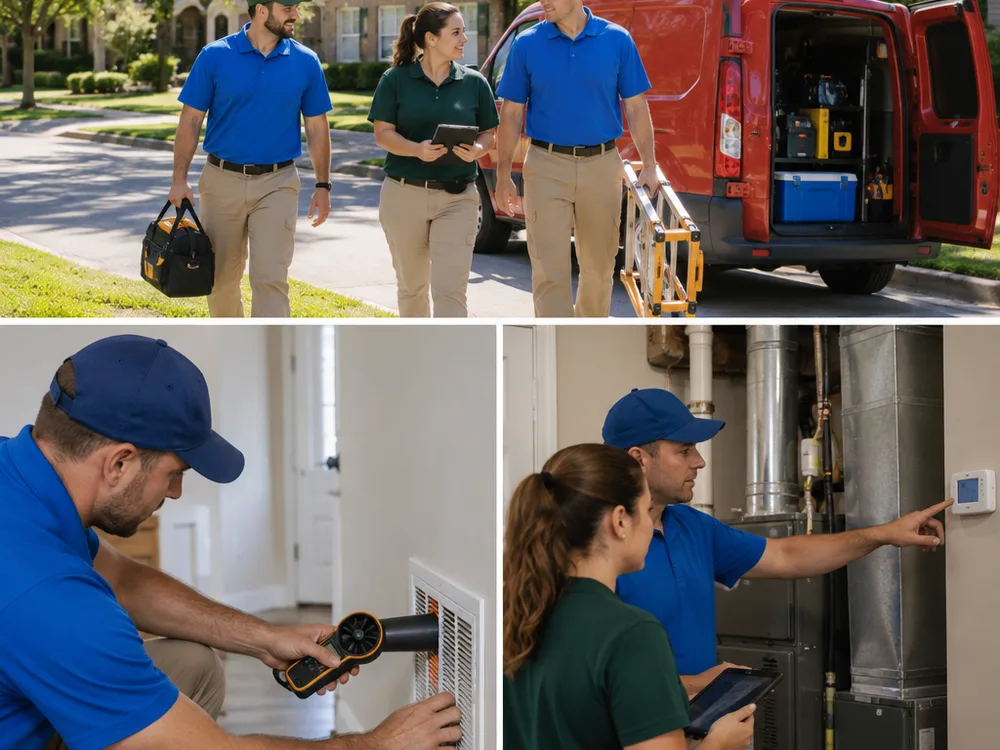
Once the cause is identified, you should receive a plain explanation of the failed component, related equipment condition, proposed correction, and any reasonable alternatives. If the system can operate safely while a decision is made, that should also be clear.