
Heating and Cooling Diagnostics
Systematic testing identifies whether the fault is electrical, mechanical, airflow-related, refrigerant-related, or tied to the controls. Findings should be explained before repairs begin.
Serving Wichita, Kansas & surrounding areas
24/7 Emergency Response
Commercial HVAC Service in Wichita, Kansas
Commercial heating and cooling service built around clear scopes, careful diagnostics, and practical recommendations for your building.
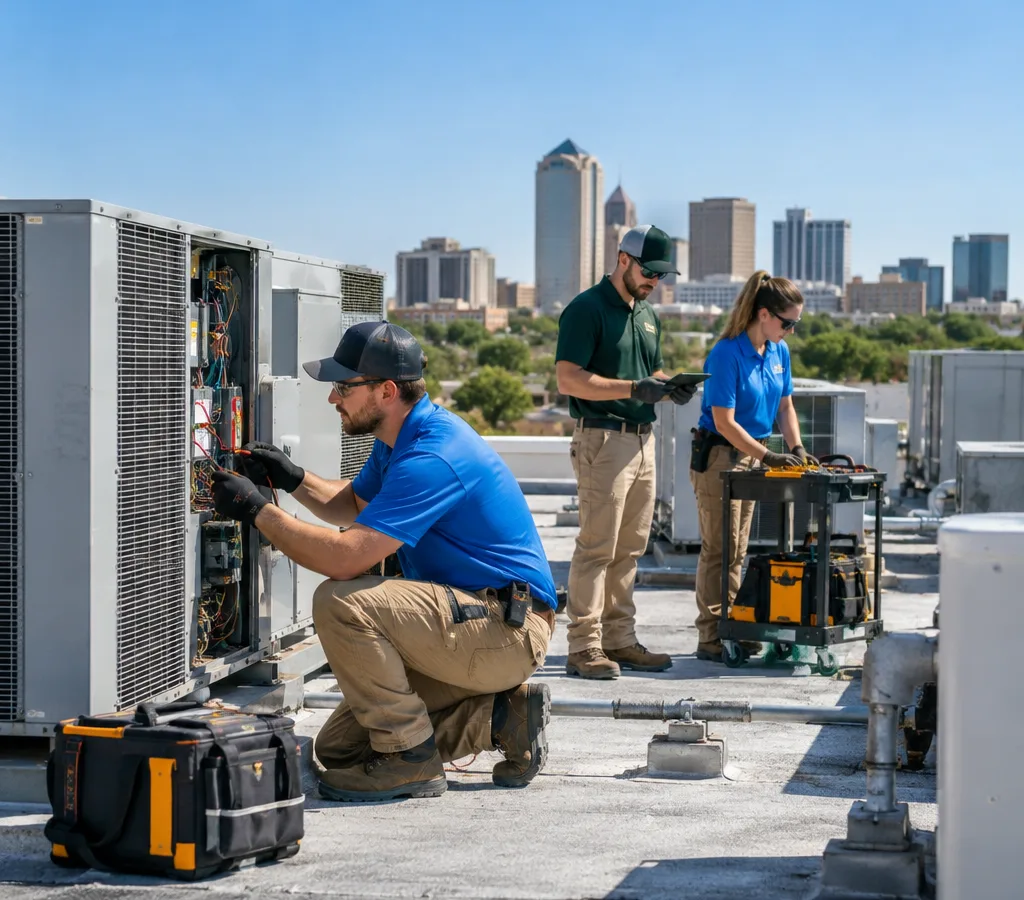
Commercial Facility Support
Finding an HVAC contractor Wichita KS businesses can rely on starts with the fundamentals: accurate diagnosis, a written scope, clear communication, and work suited to the building. HVAC Repair Wichita KS supports commercial heating and cooling needs with attention to equipment condition, occupancy, operating schedules, and access requirements.
Our work as a professional HVAC company in Wichita, KS begins with understanding the complaint and the system serving the affected space. A warm office may point to a failed capacitor, a controls issue, restricted airflow, a refrigerant problem, or a rooftop unit that has lost capacity. Replacing parts before checking electrical readings, temperature split, static pressure, filters, coils, and control signals can waste time and money.
Wichita weather puts commercial systems through meaningful seasonal changes. Hot summer afternoons increase cooling demand, while winter cold fronts can expose ignition, heat exchanger, venting, and control problems. Spring and fall are useful times to inspect equipment, clean coils, verify operation, and address worn components before peak demand.
Commercial System Capabilities
Systematic testing identifies whether the fault is electrical, mechanical, airflow-related, refrigerant-related, or tied to the controls. Findings should be explained before repairs begin.
Commercial properties may use packaged rooftop units, split systems, heat pumps, furnaces, make-up air equipment, exhaust systems, or multiple zones. Service should account for how those components work together.
Planned visits can include filter checks, coil inspection, condensate service, belt assessment, electrical testing, temperature measurements, and verification of heating and cooling sequences.
When equipment is near the end of its useful life or requires repeated repairs, a contractor should compare repair cost, condition, capacity, controls compatibility, and installation needs.
Persistent hot and cold areas may involve dirty components, damaged ductwork, poor balancing, closed dampers, zoning faults, or equipment that does not match the current use of the space.
Commercial comfort depends on correct schedules, sensor placement, setpoints, staging, and communication between controls and equipment. A control fault can resemble a mechanical failure.
Wichita Commercial Properties
A contractor should evaluate the property rather than offer a standard answer based on floor area alone. Downtown Wichita buildings may have constrained roof access, multiple tenant zones, or equipment added during different renovations. Old Town properties can combine older building shells with newer commercial interiors, which makes duct routing, ventilation, and controls worth checking carefully.
In Eastborough, smaller commercial properties may use equipment arrangements that resemble light commercial or large residential systems. Industrial facilities near the Air Capital district can have higher internal heat loads, production schedules, exhaust requirements, or large doors that affect comfort. West Wichita retail and office properties often require service planned around customer access and normal business hours.
Equipment selection should be based on a load calculation and actual building use. For replacement work, contractors may use ACCA Manual N methods or comparable commercial load calculations rather than copying the nameplate capacity of the existing unit. The evaluation should consider orientation, insulation, glass, ventilation, occupancy, lighting, plug loads, and operating schedule.
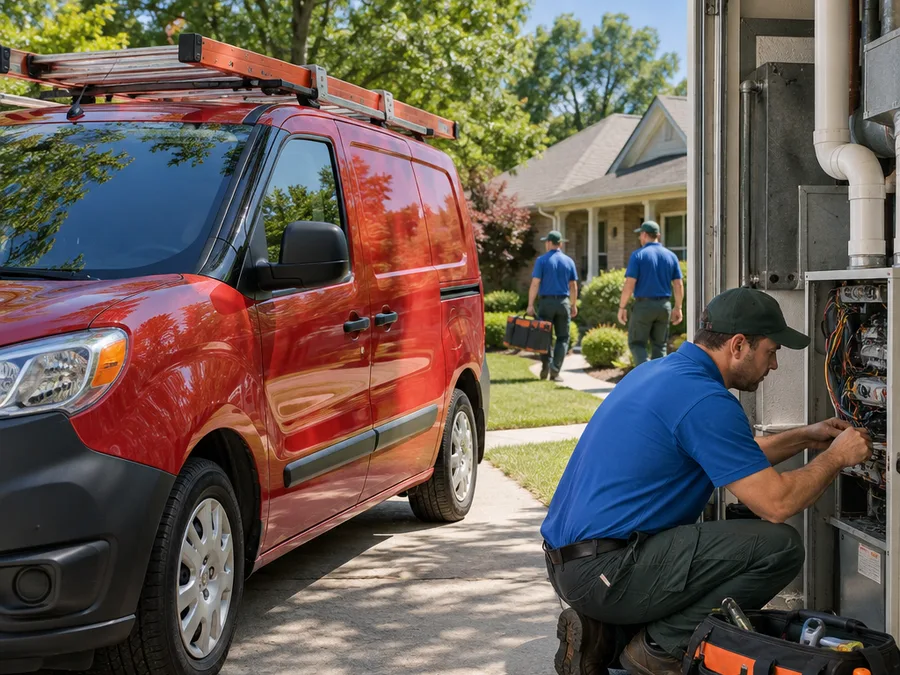
How Commercial Service Works
Step 1 of 5
The visit starts with the affected areas, when the issue occurs, recent changes, equipment history, operating schedule, and any access or tenant requirements.
Step 2 of 5
The contractor checks relevant components and records operating data. Depending on the complaint, this may include voltage, amperage, capacitors, temperature rise or split, static pressure, refrigerant readings, combustion operation, sensors, and control signals.
Step 3 of 5
You receive a practical account of the fault, the condition of the equipment, and the available options. If other defects affect safety, reliability, or performance, they should be identified separately.
Step 4 of 5
The scope should state what will be repaired or replaced and note meaningful exclusions. Replacement proposals should identify equipment type, capacity, efficiency rating, controls, curb or duct modifications, and disposal where applicable.
Step 5 of 5
After approved work is complete, the system should be operated through the relevant sequence. Final checks confirm that controls respond and that the equipment delivers heating or cooling as intended.
Compare the Complete Scope
Ask each contractor how the diagnosis will be performed and what information will appear in the proposal. A low initial price is difficult to compare when it omits access equipment, crane service, controls, electrical work, curb adaptation, duct changes, permits, start-up, or disposal. The better proposal defines the work clearly enough for you to understand what is included.
Confirm that the contractor is properly licensed and insured for the proposed work, and ask who will coordinate any required permit or inspection with the City of Wichita. For refrigerant work, technicians who service regulated equipment must hold the appropriate EPA Section 608 certification. If gas-fired equipment is involved, combustion, venting, gas connections, and safety controls require direct attention.
Ask whether replacement capacity will be calculated or simply matched to the old unit. Oversized equipment can short-cycle and struggle with humidity control, while undersized equipment may run continuously during demanding weather. Also ask how warranty labor, manufacturer parts coverage, maintenance requirements, and future filter access will be handled.
Commercial HVAC contractors Wichita KS property managers hire should also communicate around operations. Discuss roof access, tenant notice, shutdown windows, parking or loading restrictions, and whether work will interrupt occupied areas. These details belong in the plan before technicians and equipment arrive.
Equipment Life-Cycle Planning
Repair is often reasonable when the equipment is otherwise sound, the failed component is available, and the expected service life supports the expense. Replacement deserves consideration when failures repeat, major components are damaged, corrosion is extensive, the system no longer serves the space well, or parts and refrigerant constraints make continued repair less practical.
The refrigerant type matters, but it is only one part of the decision. R-22 production and import ended in the United States, so systems that depend on it require a careful repair-versus-replacement discussion. Newer equipment may use other refrigerants and can have different installation, charging, leak-detection, or handling requirements. A qualified contractor should identify the existing refrigerant and propose compatible equipment and service procedures.
For planned replacement, allow time to confirm capacity, electrical requirements, controls, duct transitions, roof curb compatibility, equipment availability, and lifting access. A like-for-like rooftop replacement can still require field measurements and coordination. Planning before failure gives the owner more control over equipment selection and scheduling.
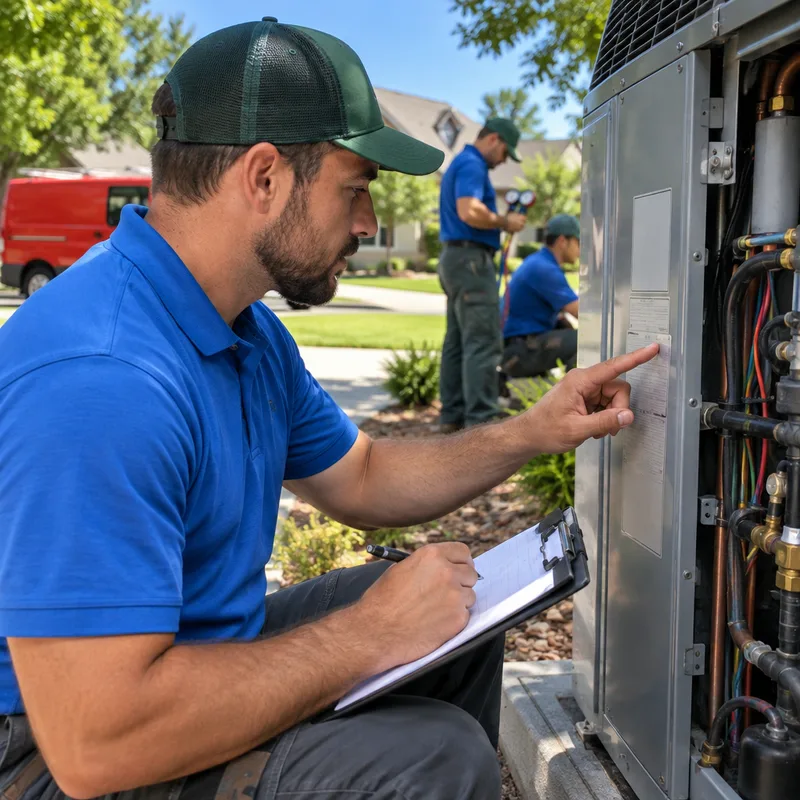
Bring the system symptoms, equipment history, and building schedule to the first conversation so the contractor can define the right inspection and a clear next step.
Call for Emergency HelpCommercial Property Questions
Commercial HVAC cost depends on the equipment, failure, access, parts, labor, and whether specialized lifting or controls work is required. A service visit and minor component repair may cost hundreds of dollars, while major compressors, heat exchangers, controls, or rooftop replacements can cost several thousand dollars or more. Wichita proposals should identify diagnostic charges, labor, parts, access equipment, and permit-related work when applicable. The exact price is confirmed after the equipment and job conditions are inspected.
Many common faults can be diagnosed during the initial visit, but intermittent controls issues, refrigerant leaks, unavailable parts, and multi-zone problems may require added testing. Roof access and tenant schedules can also affect timing. Give the contractor error codes, affected rooms, operating schedules, and a description of when the problem occurs.
Repair usually makes sense when the unit is in serviceable condition and the repair cost is reasonable compared with its remaining life. Replacement becomes more practical when failures recur, a major component has failed, corrosion is widespread, or the system no longer meets the building load. A Wichita contractor should inspect the unit, identify its refrigerant, and evaluate capacity before recommending replacement.
A replacement quote should identify the equipment, capacity, efficiency, controls, installation labor, electrical or gas connections, duct or curb modifications, lifting needs, disposal, start-up, and warranty terms. It should also state which items are excluded. If the City of Wichita requires a permit or inspection for the scope, responsibility for that coordination should be clear.
Seasonal maintenance is a practical way to find dirty coils, worn belts, blocked drains, weak electrical components, ignition problems, and control faults before demand increases. In Wichita, cooling equipment works hardest during hot summer periods, and heating faults become urgent during winter cold. The correct visit frequency depends on equipment type, operating hours, filters, occupancy, and the building environment.
Scheduling around operations is often possible when access and shutdown needs are discussed before work begins. Retail, office, industrial, and multi-tenant properties have different constraints. Tell the contractor about roof access, alarms, locked mechanical rooms, loading areas, tenant notice requirements, and times when equipment cannot be shut down.
Ask for applicable trade licensing, proof of insurance, and EPA Section 608 certification for technicians who handle regulated refrigerants. The required license and permit path can vary with the scope. For work within Wichita, confirm who will address City of Wichita requirements and any inspection that applies to the project.
Plan Your Next Step
Describe the comfort problem, equipment involved, and building schedule. HVAC Repair Wichita KS will help define the inspection, explain the findings, and outline the work your facility needs.