HVAC Installation in Wichita, Kansas

HVAC Installation in Wichita, KS

Get a properly sized heating and cooling system, a clear installation plan, and dependable comfort through Kansas temperature swings.

✓Load-based system sizing ✓Written installation scope ✓Measured commissioning checks
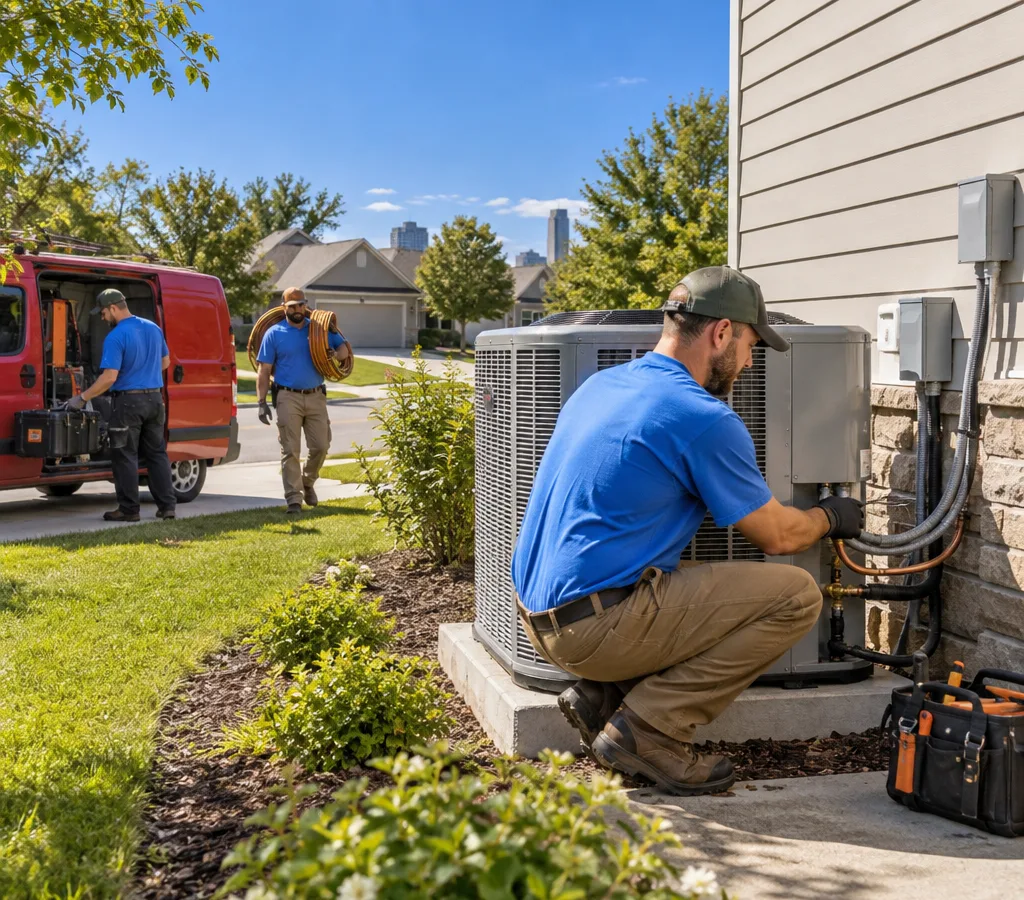
A technician installing a modern outdoor HVAC unit beside a Wichita home, with refrigerant lines and electrical connections visible.

Home-Specific System Design

A Local Installation Plan Built Around Your Home

A dependable HVAC installation in Wichita, KS starts with the building, not the equipment label. The installer should assess conditioned floor area, insulation, windows, air leakage, orientation, occupancy, and existing ductwork before recommending capacity. Replacing an old unit with another unit of the same size can repeat an earlier sizing mistake.

HVAC Repair Wichita KS approaches each project as a complete comfort system. For every installation, Wichita's local HVAC service considers equipment sizing, airflow, controls, drainage, electrical requirements, and commissioning as parts of one installation. You receive a defined scope that identifies the proposed equipment, included labor, necessary accessories, and the work required to put the system into operation.

Wichita has hot summers, cold winter periods, strong winds, and wide temperature changes between seasons. Those conditions make both heating and cooling performance relevant. Proper sizing matters because oversized equipment can cycle too quickly, while undersized equipment may struggle during demanding weather. The goal is steady comfort and correct operation, not simply installing the largest unit that fits.

Request Emergency Service

Equipment, Airflow & Setup

What a Complete HVAC Installation Includes

A complete installation may include a central air conditioner and furnace, a heat pump with an air handler, or another matched configuration suited to the property. The outdoor and indoor components must be compatible, and the blower must deliver the airflow required by the equipment. Refrigerant line size, condensate drainage, filtration, thermostat controls, electrical protection, venting, and combustion air are reviewed when applicable.

Existing ducts also affect the result. Restricted returns, undersized supplies, disconnected joints, and excessive static pressure can reduce comfort even when the new equipment is correctly sized. A qualified HVAC installer in Wichita should measure or evaluate airflow rather than assume the ducts are adequate. When duct changes are necessary, they should be identified before installation so the scope remains clear.

Equipment efficiency ratings are useful, but rated performance depends on correct setup. Refrigerant charge, temperature split, gas pressure where applicable, blower settings, thermostat operation, and total external static pressure should be checked during commissioning. These measurements confirm that the installed system is operating as intended.

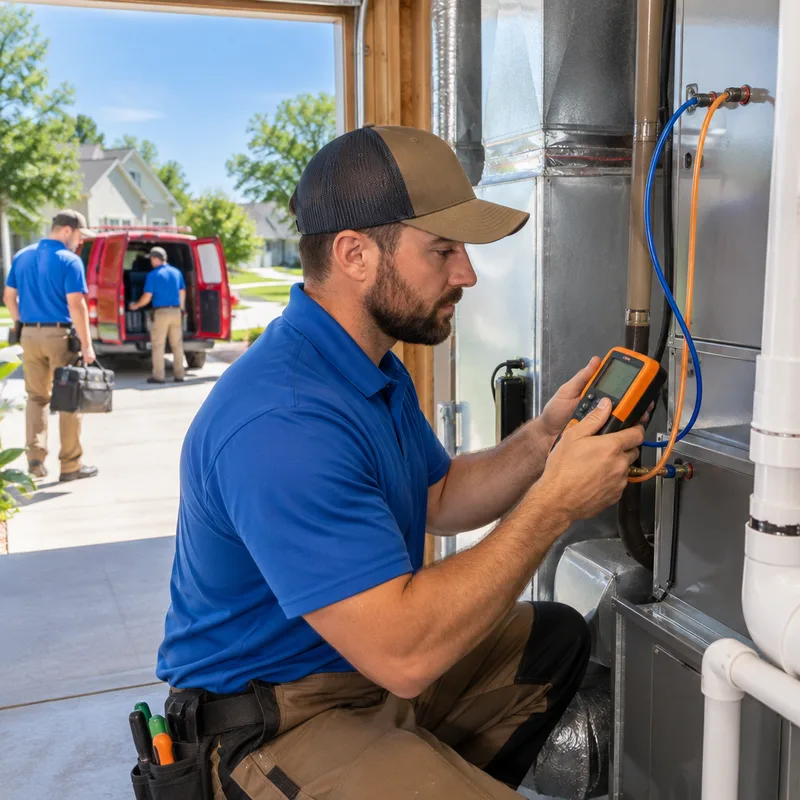
Close view of an HVAC technician measuring total external static pressure at a newly installed indoor air handler.

Measured airflow and operating checks are part of proper commissioning.

Request Emergency Service

System Options

Choosing Equipment for Wichita Conditions

✓

Central Air and Furnace Systems

A matched split system pairs an outdoor air conditioner with an indoor evaporator coil and furnace. Correct coil matching, venting, gas connections, electrical work, and blower setup all affect safe operation and comfort.

✓

Heat Pump Systems

A heat pump provides cooling and heating. System selection should account for cold-weather capacity, the chosen backup heat method, electrical requirements, and how controls stage the equipment as outdoor temperatures change.

✓

Ductless Equipment

Ductless mini-splits can suit additions, converted spaces, or areas without practical duct access. Placement affects air distribution, condensate routing, line-set length, service access, and the appearance of indoor units.

✓

Indoor Airflow and Filtration

Filters must protect equipment without creating excessive resistance. Return-air capacity, filter size, cabinet design, and blower settings should work together to maintain appropriate airflow.

✓

Controls and Zoning

Thermostats must be compatible with the selected system. Zoned ductwork requires careful design because closed dampers can raise static pressure and interfere with equipment performance.

✓

Replacement or New Construction

Replacement work often uses existing ducts and utility connections after they are evaluated. New construction allows earlier planning for equipment location, duct routing, return paths, drainage, and service clearances.

Request Emergency Service

How Installation Works

Our HVAC Installation Process

  1. Step 1 of 6

    Assess the Property

    We discuss comfort concerns and inspect the existing equipment, utility connections, thermostat, filter arrangement, drainage, and accessible ductwork. New systems are planned around the actual building conditions.

  2. Step 2 of 6

    Calculate the Required Capacity

    A Manual J load calculation uses factors such as floor area, insulation, windows, orientation, and design temperatures to estimate heating and cooling loads. Equipment is then selected to meet those loads without unnecessary oversizing.

  3. Step 3 of 6

    Define Equipment and Scope

    The written proposal identifies the system configuration, efficiency ratings, major components, controls, included accessories, labor, and anticipated duct or electrical changes. Compatibility and practical service access are considered before work starts.

  4. Step 4 of 6

    Remove and Install

    Existing equipment is removed when the project is a replacement. The new indoor and outdoor units are set, then refrigerant, electrical, drainage, venting, fuel, controls, and duct connections are completed as the system requires.

  5. Step 5 of 6

    Start, Test, and Commission

    The system is started and checked for correct operation. Commissioning may include airflow readings, static pressure, temperature measurements, refrigerant checks, safety controls, thermostat functions, and combustion testing where applicable.

  6. Step 6 of 6

    Review Operation

    We explain thermostat settings, filter access, normal operating sounds, basic maintenance, and equipment documentation. You should know how to use the system and what routine care it requires before the work is considered complete.

Request Emergency Service

Installation Cost Planning

How Much Does HVAC Installation Cost in Wichita?

HVAC installation in Wichita typically costs about $7,000 to $15,000 for a standard residential system replacement, while high-efficiency, variable-capacity, ductless, or major ductwork projects may exceed that range. These are general planning figures, not a binding quote.

Final price depends on capacity, equipment type, efficiency, controls, electrical or gas work, refrigerant-line condition, access, and duct modifications. Rebates or incentives may change and should be verified for the selected equipment. Exact cost is confirmed after an on-site assessment and written proposal.

Request Emergency Service

Wichita-Area Planning

Local Factors That Affect HVAC Design

Housing conditions vary across the Wichita area, so installation decisions cannot rest on ZIP code or floor area alone. Older homes in College Hill may have finished spaces, additions, or duct routes that call for close inspection. Riverside properties can also have older construction where return-air paths and equipment clearances deserve attention. In newer suburban development around Maize and Derby, larger floor plans, open layouts, and multiple levels can create different airflow and zoning questions.

These examples do not determine what any individual home needs. An on-site evaluation does. Wichita's seasonal temperature changes also place demands on both sides of a system, so the heating source, cooling capacity, and control strategy must operate as a matched design.

Permit and inspection requirements can depend on the property jurisdiction and scope. Work within Wichita should be planned around applicable City of Wichita requirements, while homes in nearby communities may fall under different local authorities. Equipment placement also needs suitable clearance for airflow and future service, and condensate must drain through an approved route.

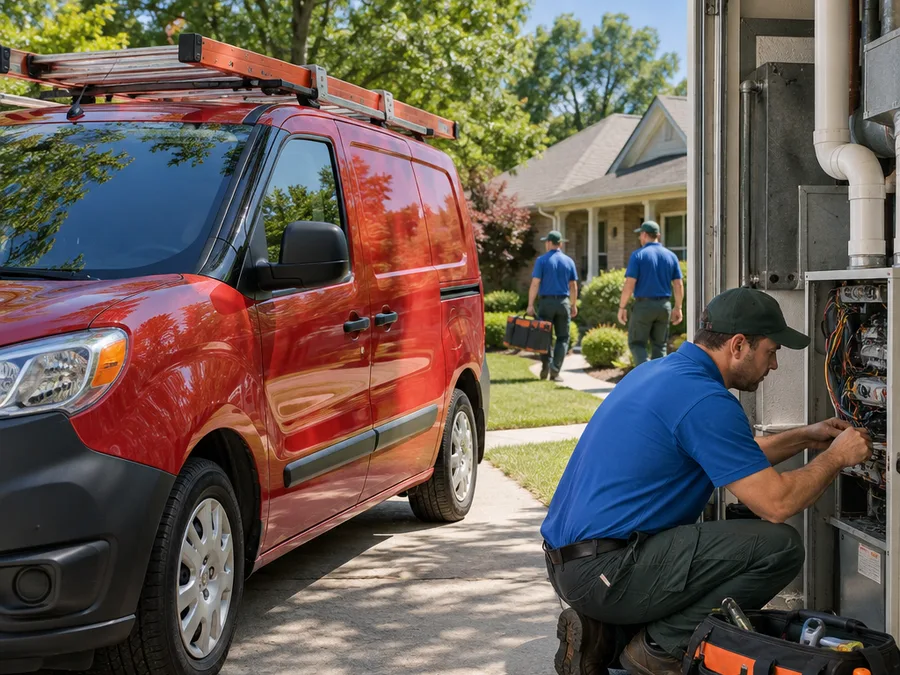
A service vehicle and installation crew setting HVAC equipment at a Wichita-area house with the work area kept organized.

Site conditions, access, and existing construction shape the installation plan.

Request Emergency Service

Compare the Complete Scope

What to Look for in an HVAC Installer in Wichita

Ask how the proposed capacity was determined. A professional recommendation should account for the home's heating and cooling loads, rather than relying only on the old unit's nameplate. Ask whether the indoor and outdoor components are an approved match and whether the proposal identifies efficiency ratings and model information.

The scope should also state who handles removal, disposal, permits when required, controls, drain work, electrical changes, startup, and testing. If existing ducts are being reused, ask how airflow and static pressure will be evaluated. If the proposal includes major duct changes, make sure the affected rooms and materials are identified.

Warranty details deserve a careful reading. Manufacturer coverage and installer labor coverage are separate matters, and registration requirements can vary. Ask what maintenance the equipment needs and who will provide model numbers, installation records, and warranty documents. A clear proposal makes competing bids easier to compare because the equipment and included work are stated plainly.

Request Emergency Service

Get a written installation scope based on your home's load, existing ductwork, utility connections, and comfort concerns before selecting equipment.

Call for Emergency Help

Homeowner Questions

HVAC Installation Questions

How long does HVAC installation take in Wichita?+

A straightforward residential replacement is often completed within one working day, while duct modifications, electrical upgrades, difficult access, or multi-zone equipment can extend the schedule. The installer should confirm the expected duration after inspecting the property and defining the scope. Permit or inspection scheduling within Wichita or a surrounding jurisdiction may also affect completion.

How should an HVAC installer in Wichita size my system?+

The installer should use a heating and cooling load calculation, commonly Manual J, rather than relying only on square footage or the old unit's capacity. The calculation considers insulation, windows, orientation, air leakage, and local design conditions. Duct capacity and equipment selection are then evaluated with methods such as Manual D and Manual S when applicable.

Should I replace the furnace and air conditioner together?+

Replacing both can make sense when components are aging, incompatible, or unlikely to provide the required airflow and efficiency as a matched system. It is not automatically necessary in every home. The evaporator coil, blower, furnace or air handler, outdoor unit, and controls should be checked for compatibility before the decision is made.

Can a new HVAC system use my existing ductwork?+

Existing ductwork can often be reused if it is correctly sized, reasonably sealed, and capable of carrying the required airflow. The installer should inspect accessible ducts, return paths, filter restrictions, and static pressure. Older Wichita homes with additions or altered room layouts may need targeted duct corrections rather than complete replacement.

Is a heat pump suitable for Wichita weather?+

A properly selected heat pump can provide heating and cooling in Wichita, but the design must account for capacity during colder outdoor temperatures. The proposal should identify the backup heat method, controls, electrical needs, and expected changeover operation. A dual-fuel system may pair a heat pump with a furnace, while an all-electric design may use supplemental electric heat.

Are permits required for HVAC installation in Wichita?+

Permits and inspections may be required depending on the equipment, connections, and project scope. Properties within Wichita are subject to applicable City of Wichita rules, while nearby cities may have their own requirements. The written scope should identify responsibility for permits and required inspections before work begins.

What information should an HVAC installation quote include?+

A useful quote should identify equipment models or specifications, capacity, efficiency ratings, included labor, controls, accessories, removal, and any duct, electrical, gas, drain, or vent changes. It should also address warranty terms, permit responsibility, payment schedule, and expected timing. Written exclusions help you compare proposals on equal terms.

Plan Your Installation

Plan Your New HVAC System with Confidence

Tell HVAC Repair Wichita KS about the property, current equipment, and comfort problems. We will assess the installation conditions and outline suitable equipment, required work, and a clear next step.