The Furnace Will Not Start
A blank thermostat, tripped breaker, open access-panel switch, failed igniter, control fault, or interrupted gas supply can prevent a heating cycle. Testing isolates the cause before any component is replaced.
Serving Wichita, Kansas & surrounding areas
24/7 Emergency Response
Furnace Repair in Wichita, Kansas
Get a careful diagnosis, a clear explanation of the fault, and dependable work that restores heat without pushing repairs your system does not need.
Cold-Weather Heating Help
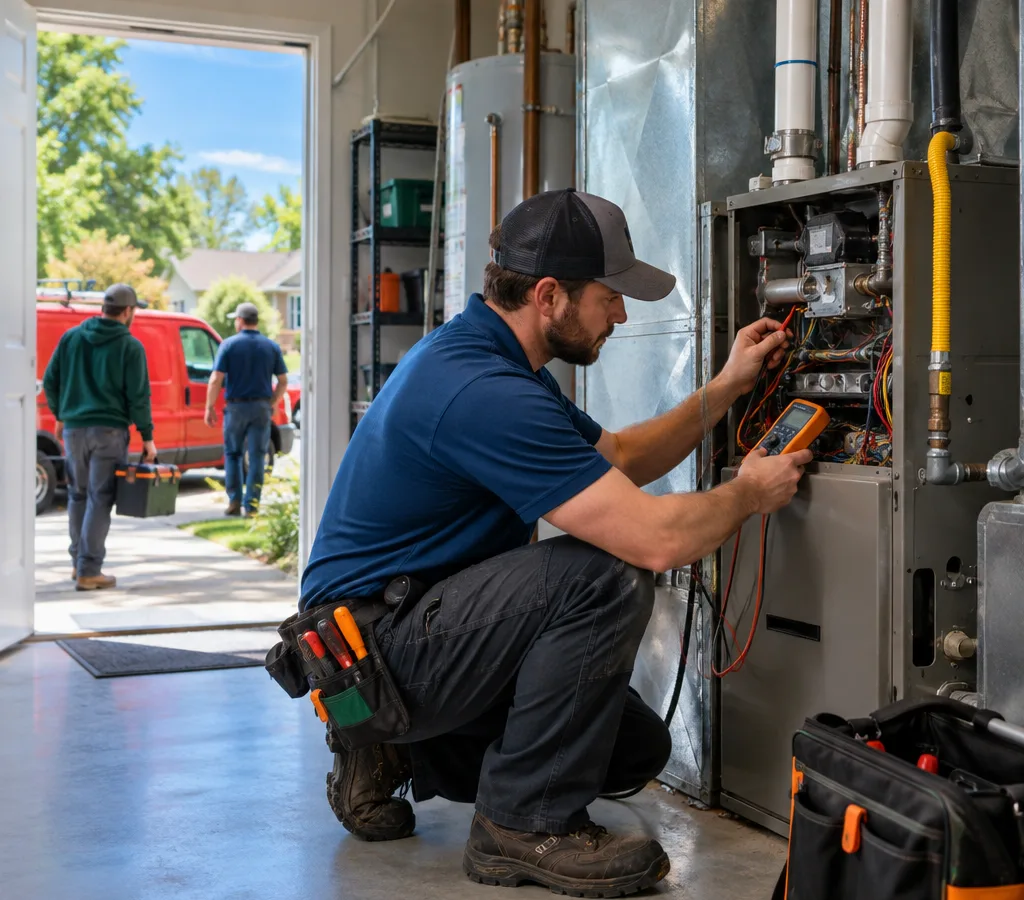
When the house is cold, furnace repair in Wichita, KS, should begin with a real diagnosis rather than a quick parts swap. HVAC Repair Wichita KS checks the heating cycle, identifies the failed component or control, and explains the repair before work proceeds. Wichita winters can move between mild afternoons and hard freezes, so a furnace that runs intermittently may become an urgent problem as outdoor temperatures fall.
Our HVAC specialists serving Wichita, KS work on residential heating problems such as a furnace that will not start, weak airflow, repeated cycling, unusual noises, and burners that shut down before the thermostat is satisfied. We also investigate rising heat bills when they coincide with longer run times or poor comfort. The objective is simple: find the cause, correct it properly, and verify that the system operates safely before the visit ends.
Heating Warning Signs
A blank thermostat, tripped breaker, open access-panel switch, failed igniter, control fault, or interrupted gas supply can prevent a heating cycle. Testing isolates the cause before any component is replaced.
A restricted filter, blower problem, duct issue, or overheating furnace can reduce airflow. Room-to-room differences also warrant checking supply registers, return-air paths, and system operation.
Short cycling can result from restricted airflow, flame-sensing trouble, thermostat issues, or a furnace reaching its high-temperature limit. Continued cycling adds wear and may leave the home cold.
Rattling may indicate a loose panel or component. Squealing can point to blower wear, while banging during ignition requires prompt attention. The sound and its timing help narrow the diagnosis.
A dirty flame sensor, ignition fault, venting concern, or control problem may interrupt burner operation. Combustion and safety controls should be checked rather than bypassed.
A brief dusty smell at seasonal startup can occur, but persistent burning, electrical, or fuel odors need attention. Leave the home and contact the gas utility or emergency services if you suspect a gas leak.
Cause-Focused Assessment
A sound diagnosis follows the furnace's sequence of operation. The thermostat requests heat, the inducer starts on applicable furnaces, the pressure switch proves draft, ignition begins, the gas valve opens, and the flame sensor confirms combustion. The blower then moves heated air through the duct system. A failure at any point can stop the cycle, and the fault code alone does not always identify the underlying cause.
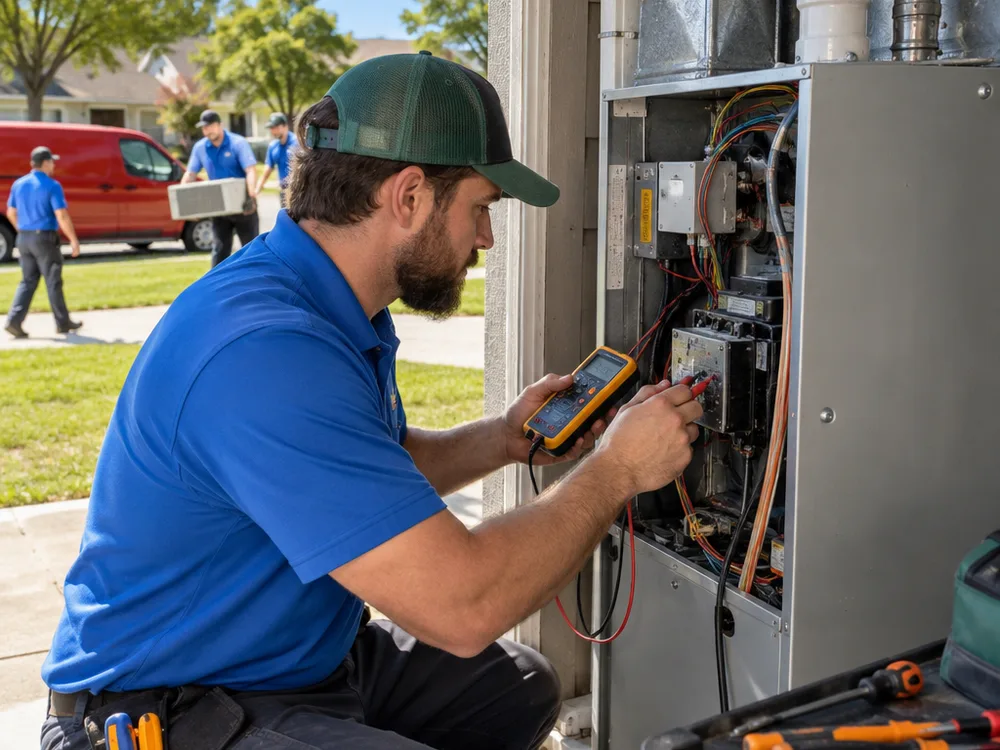
Testing may include thermostat operation, electrical connections, voltage, amperage, ignition components, flame-sensor signal, blower performance, filter condition, limit switches, pressure switches, venting, and condensate drainage on a high-efficiency condensing furnace. Heat exchangers and combustion areas are visually inspected when symptoms call for it. After the repair, the technician runs the system through a complete cycle and confirms that safety controls respond as intended.
Keep working carbon monoxide alarms outside sleeping areas and on occupied levels according to the alarm manufacturer's instructions. An alarm, visible soot, persistent fuel odor, or physical symptoms such as headache and dizziness calls for immediate evacuation and emergency assistance, not routine troubleshooting.
How Service Works
Step 1 of 5
We start with what you have noticed: when the problem began, whether it is constant or intermittent, and what happens after the thermostat requests heat. Recent filter changes, power interruptions, or unusual sounds can provide useful clues.
Step 2 of 5
The technician checks the furnace condition and follows the operating sequence with appropriate instruments. Diagnostic work focuses on confirming the fault rather than relying on symptoms alone.
Step 3 of 5
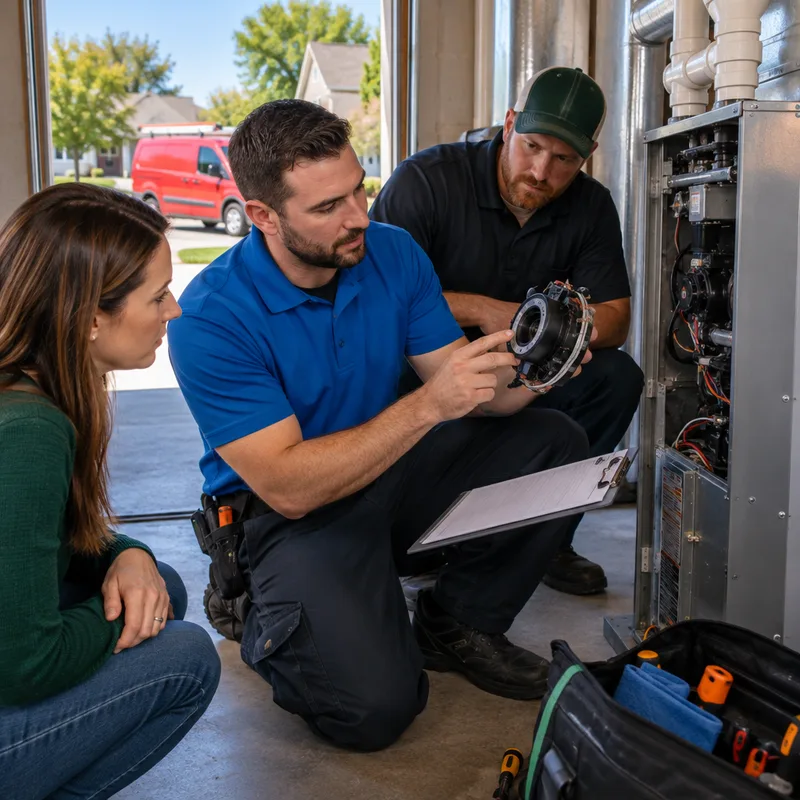
You receive a plain-language explanation of the problem, the proposed repair, and any relevant condition that may affect reliability. If repair and replacement both deserve consideration, the practical differences should be clear before you decide.
Step 4 of 5
Approved work is performed with components suited to the equipment. Access panels, wiring, tubing, drains, and other disturbed parts are secured before testing.
Step 5 of 5
The furnace is run through a heating cycle. The technician checks startup, burner operation, blower response, shutdown, and the repaired function before wrapping up.
Repair Cost Factors
Furnace repair in Wichita typically costs about $150 to $1,200, depending on the fault. A basic cleaning, sensor service, or minor electrical repair may fall near the lower end, while a blower motor, control board, inducer assembly, or major ignition repair can cost substantially more.
Equipment type, part availability, access, diagnostic time, after-hours scheduling, and related damage change the final price. Older systems can also require discontinued or special-order parts. The exact cost is confirmed after the furnace is inspected and the failed component is identified.
Make an Informed Decision
Repair is often reasonable when the problem is isolated, suitable parts are available, and the furnace is otherwise in sound condition. Replacement deserves consideration when a major component has failed, the heat exchanger is damaged, parts are difficult to obtain, or breakdowns have become frequent. A repair estimate should give you enough information to compare the immediate expense with the condition and likely service life of the whole system.
Age matters, but it should not make the decision by itself. Ask what failed, whether another condition contributed to the failure, and what testing supports the recommendation. For example, replacing a limit switch without correcting restricted airflow may leave the underlying overheating problem unresolved.
Wichita includes older central neighborhoods, established areas such as College Hill, and newer housing on the metro's expanding edges. Furnace models, venting arrangements, duct layouts, and equipment access vary accordingly. The correct recommendation depends on the installed system and its condition, not the neighborhood name or a rule based only on age.
Before the Service Visit
A few safe checks can save time before the technician arrives. Confirm that the thermostat is set to heat, replace dead thermostat batteries if applicable, make sure the furnace switch has not been turned off, and inspect the filter. Check the electrical panel once for a tripped breaker. If it trips again, leave it off and arrange service. Do not remove sealed combustion covers, handle gas controls, or bypass a safety switch.
Clear a path to the furnace and move stored items away from the equipment. If the unit is in an attic, crawlspace, closet, or finished utility area, mention access conditions when arranging the visit. Share the equipment brand, any displayed fault code, and whether the problem changes with weather or time of day. A short recording of an intermittent sound can also help.
Homes served by Kansas Gas Service may use natural-gas furnaces, but the utility handles gas delivery and suspected supply emergencies rather than internal furnace component repairs. If you smell gas, leave the building without operating switches or creating a flame, move to a safe location, and contact the gas utility or emergency services. For ordinary heating faults without a fuel odor, a furnace technician can diagnose the appliance.
A furnace problem often becomes more disruptive when outdoor temperatures drop. Arrange a diagnostic visit while the symptoms are still intermittent and get a clear repair plan based on testing.
Call for Emergency HelpHomeowner Questions
Many common furnace repairs can be completed during one visit when the required part is available. Diagnostic complexity, equipment access, specialty components, and parts availability affect timing. During a cold Wichita weather event, demand can increase sharply, so arranging service when symptoms first appear may reduce the chance of a complete loss of heat.
A short-cycling furnace should be shut down and inspected if it cannot complete a normal heating cycle. Restricted airflow, overheating, thermostat trouble, flame loss, and pressure-switch faults are possible causes. Repeated restarts add stress to components, and a safety control may be stopping operation for a valid reason.
A furnace can blow cool air when the thermostat fan is set to on, the burners fail to ignite, the flame drops out, or a high-limit switch stops the burners while the blower continues. First set the fan to auto and check the filter. If the air remains cool, professional testing is appropriate because ignition and safety-control faults require proper instruments.
Repair is suitable when the failure is limited, the furnace is safe, and the cost makes sense relative to its overall condition. Replacement may be the better choice for a damaged heat exchanger, unavailable parts, repeated major failures, or broad deterioration. A Wichita furnace repair estimate should identify the failed part and provide enough context to compare both choices.
Provide the furnace brand, approximate age if known, thermostat behavior, visible fault code, and a clear description of when the problem occurs. Mention any gas odor, carbon monoxide alarm, breaker trip, unusual sound, or difficult equipment access. These details help the technician prepare, although hands-on testing is still needed to confirm the cause.
The visit should address combustion safety when the symptoms, equipment condition, or repair involve burners, venting, draft, or the heat exchanger. The exact tests depend on the furnace and reported issue. Household carbon monoxide alarms remain necessary because a service inspection does not replace continuous monitoring in the home.
A bang at ignition needs prompt diagnosis because delayed ignition is one possible cause. Dirty burners, ignition trouble, gas-pressure issues, or expanding ductwork can produce different sounds. Turn the system off if the noise is severe, if you smell fuel, or if soot is visible, and do not attempt to adjust the burners yourself.
Plan Your Next Step
Describe what the furnace is doing, when the problem started, and any fault code or unusual sound you have noticed. HVAC Repair Wichita KS will help arrange the next step toward a tested, clearly explained repair.